 English
 русский
 Español
 Français
 عربى
عربى italiano
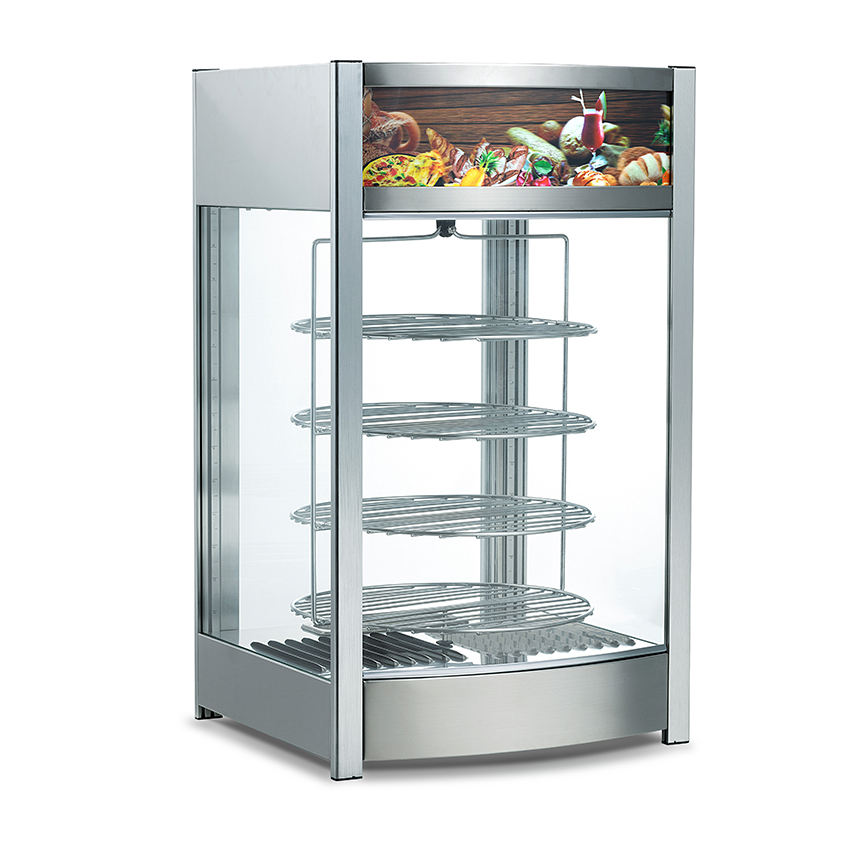
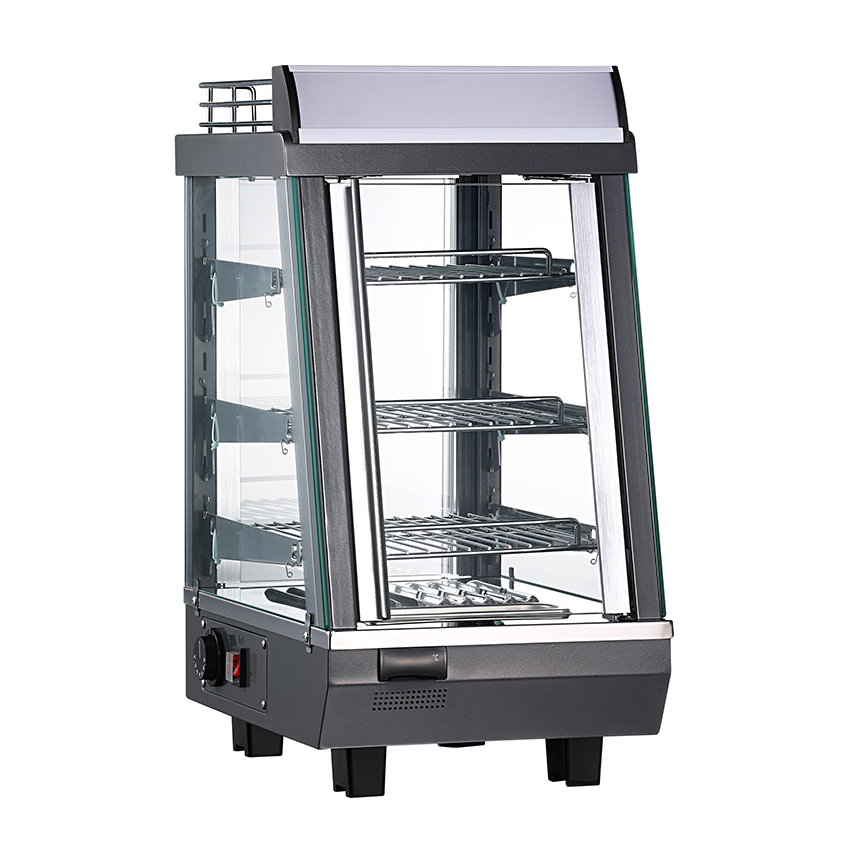
Multi-product thermal display cabinet
The multi-product thermal insulation display cabinet has various sizes, elegant appearance and unique design. It ad...



At 10:30 p.m. a hotel banqueting kitchen pulls 38 kg of braised short ribs off the pass at around 58 °C. Six hours later that food has to be at 5 °C or below, and the kitchen has to be able to show how it got there. In a room with no spare floor space, a countertop blast chiller is often the only appliance that can make that deadline.
The conclusion first: buy a countertop blast chiller when your bottleneck is speed per batch rather than total volume. It will not replace a walk-in or a roll-in unit for 100-litre batches, but for 5 to 15 kg trays of sauce, rice, pastry cream or portioned mains it turns a five-hour fridge cool-down into a documented 90-minute cycle.
This guide covers what the machine actually does, the cooling limits it has to meet under FDA and UK rules, the specifications that decide whether it performs in service, and where it sits in the cold chain next to display and holding equipment.
Content
A blast chiller is a forced-air refrigerator built for one job: pulling heat out of hot food fast enough that it spends as little time as possible between 5 °C and 57 °C (41 °F and 135 °F), the range where bacteria multiply most quickly.
A display fridge or a walk-in moves air gently and drops food temperature a few degrees at a time. A blast chiller uses a high-velocity fan, a large evaporator and a compressor sized for a short, hard pull. That is the whole difference, and it is why the same 10 kg tray of rice takes roughly 90 minutes in a blast chiller and several hours in a walk-in.
Most countertop units offer three cycle types:
Manufacturer spec sheets commonly quote a benchmark of +70 °C to +3 °C in 90 minutes for chilling, and +70 °C to -18 °C in around four hours for freezing. Treat those numbers as a starting point for the rated batch weight rather than a promise for every load: 15 kg of stew will always take longer than 5 kg of sauce.
| Attribute | Countertop blast chiller | Walk-in or display fridge | Roll-in blast chiller |
|---|---|---|---|
| Air movement and cooling rate | High-velocity air, hard pull, designed around a 90-minute chill cycle | Gentle circulation, cools over several hours | High-velocity air with the same pull as countertop units |
| Typical batch size | 5 to 15 kg per cycle | Any volume, but slowly | 40 to 200 kg, trolley loaded |
| Space required | About 600 x 600 mm of counter or a low stand | Cabinet or room footprint | Floor space equal to a trolley plus clearance |
| Best used for | Small kitchens, bakeries, sushi counters, batch cook-chill | Holding food that is already cold | Central production kitchens and banqueting |
Cold-chain rules are written around the same physics, and they are what a blast chiller is really bought to satisfy.
In the United States, the FDA Food Code (section 3-501.14) sets a two-stage cooling requirement for cooked food: from 57 °C (135 °F) down to 21 °C (70 °F) within two hours, and from 57 °C to 5 °C (41 °F) or below within six hours in total. The second stage is where ordinary refrigeration usually fails, because a fridge already full of cold stock has very little spare capacity to absorb a hot tray.
In the United Kingdom, Food Standards Agency guidance is simpler but often stricter in practice: cool cooked food as quickly as possible, ideally within 90 minutes, before refrigerating it. Across the EU, Regulation (EC) No 852/2004 requires food businesses to run HACCP-based procedures, which in most kitchens means written cooling records rather than a verbal promise.
The two charts below show the time budget a countertop unit has to work within, and what a completed blast-chill cycle looks like against the FDA limits.
Blast chilling is not equipment every kitchen needs. It pays for itself in a handful of clearly defined situations.
Pastry cream, custard, ganache and mousse are the classic case: cooked hot, dense, and exactly the foods that will pull a display cabinet's holding temperature up if they go in warm. Chilling a 5 kg batch to 3 °C before it is piped or filled keeps production moving the same day and protects everything that sits in the shop afterwards.
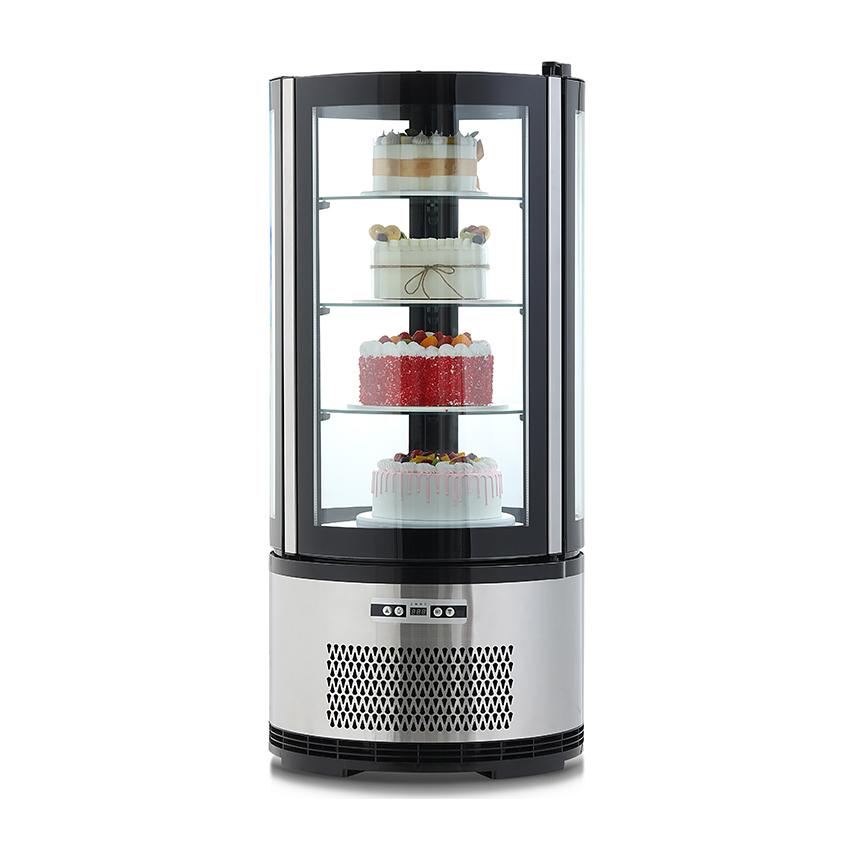
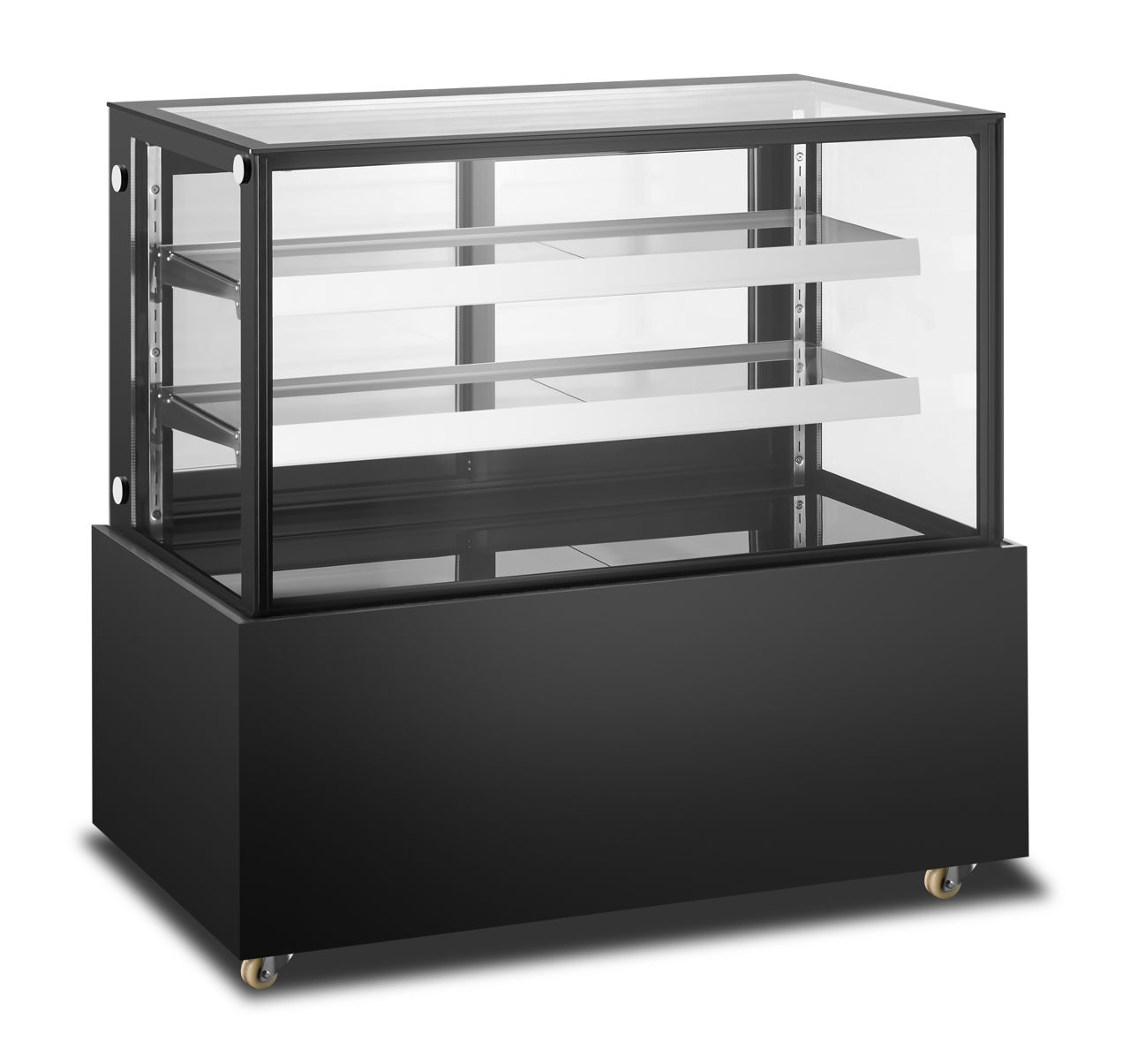
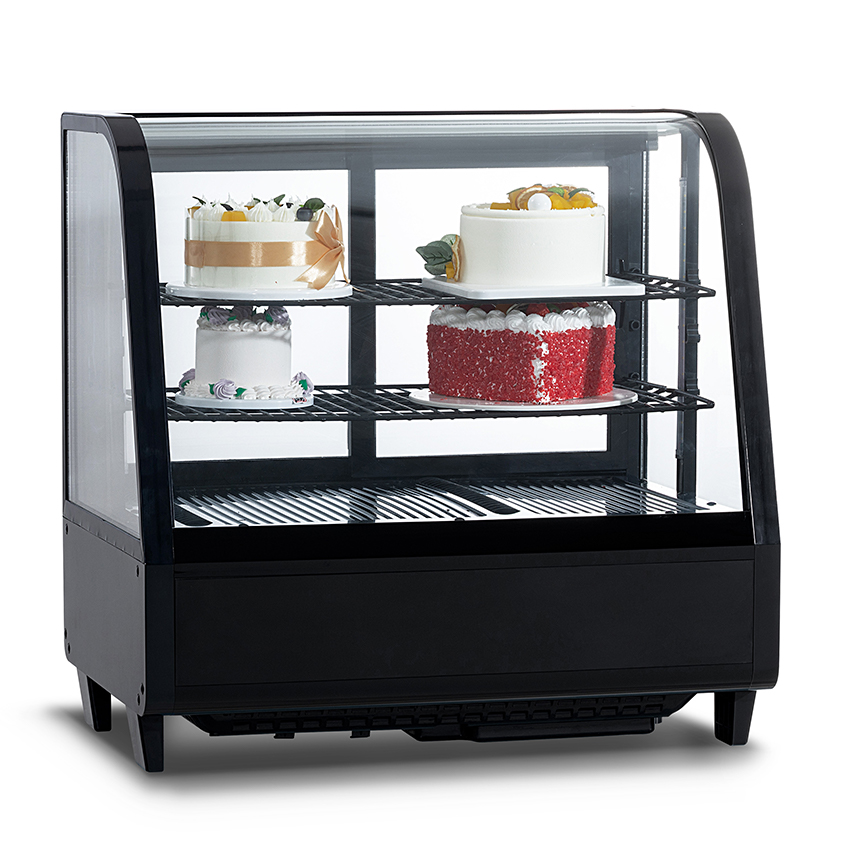 Cake display cabinetCake display cabinets are favored by customers for their beautiful shapes and diverse styles. They have rich functions, including refrigeration and preservation, LED l...View Product →
Sushi rice has to come down quickly and safely, and blocks of fish live in a narrow band just above freezing. A countertop chiller beside the prep station shortens the time rice and fillings spend in the danger zone, while the case in front of the customer holds the finished product at serving temperature.
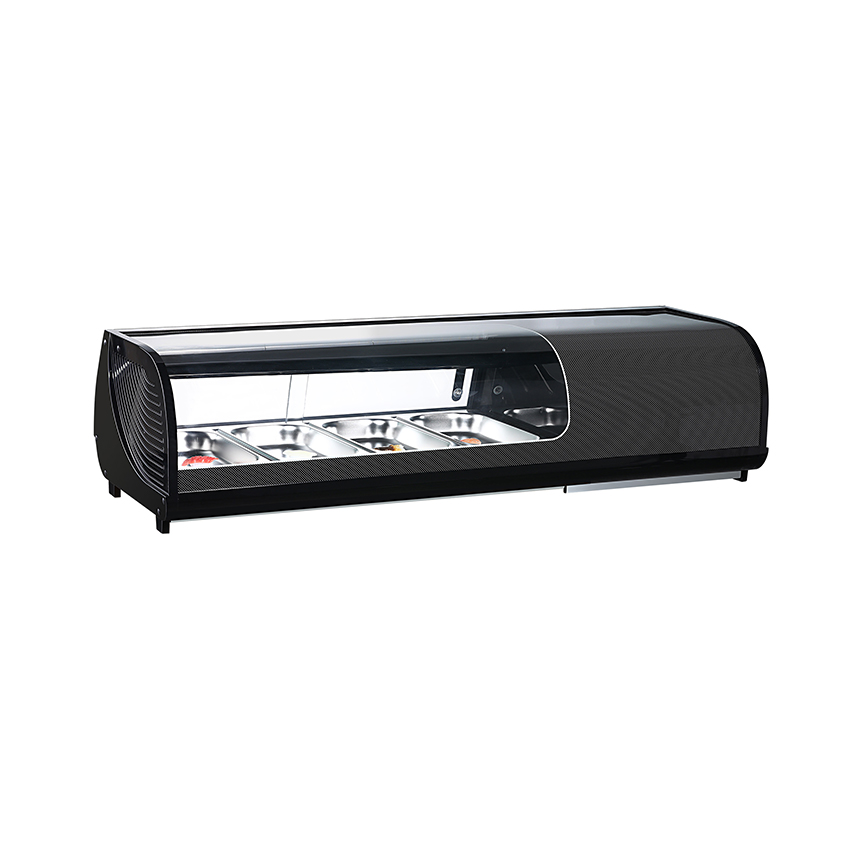
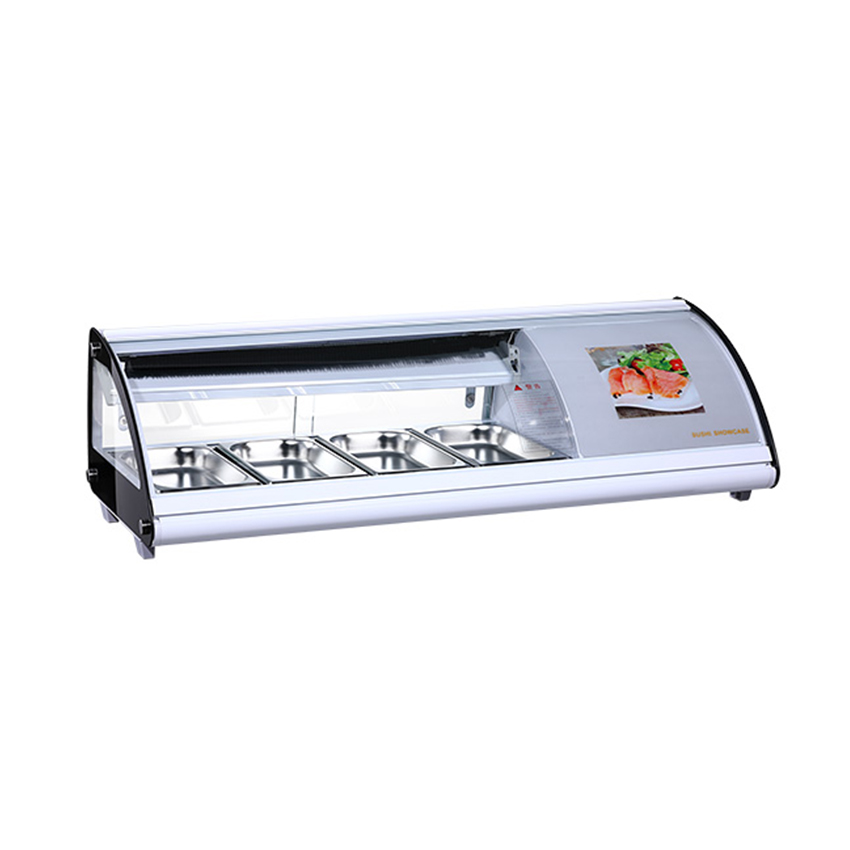 Sushi display cabinetSushi display cabinets are equipped with various European GN standards. The side wall anti-crushing line design makes stacking easier. The display cabinets are beautif...View Product →
Batch cooking for the next day depends on getting trays to storage temperature before the night shift ends. For kitchens producing in 5 to 15 kg lots, a countertop unit next to the range removes the argument about whether the walk-in can cope.
Where floor space is measured in centimetres, a unit on a stand under the pass is often the only cooling equipment that will fit at all. The pattern is the same everywhere: the chiller handles the fast drop from hot to cold, and something else handles the hours or days that follow.
The list below is short on purpose. These are the items that generate complaints when they turn out to be wrong.
A blast chiller only solves half of the problem. Food brought down to 3 °C then has to stay cold while it is stored, moved and sold, and that is where the rest of the refrigeration line matters.
For retail and food service, the equipment closest to the customer is usually a countertop or floor-standing refrigerated display case. These units have to do three things at once: hold product at a stable temperature, keep it visible, and stay quiet enough for a front-of-house area. If you are weighing up which format suits a shop layout, this overview of what a commercial refrigerated display cabinet actually does is a practical starting point.
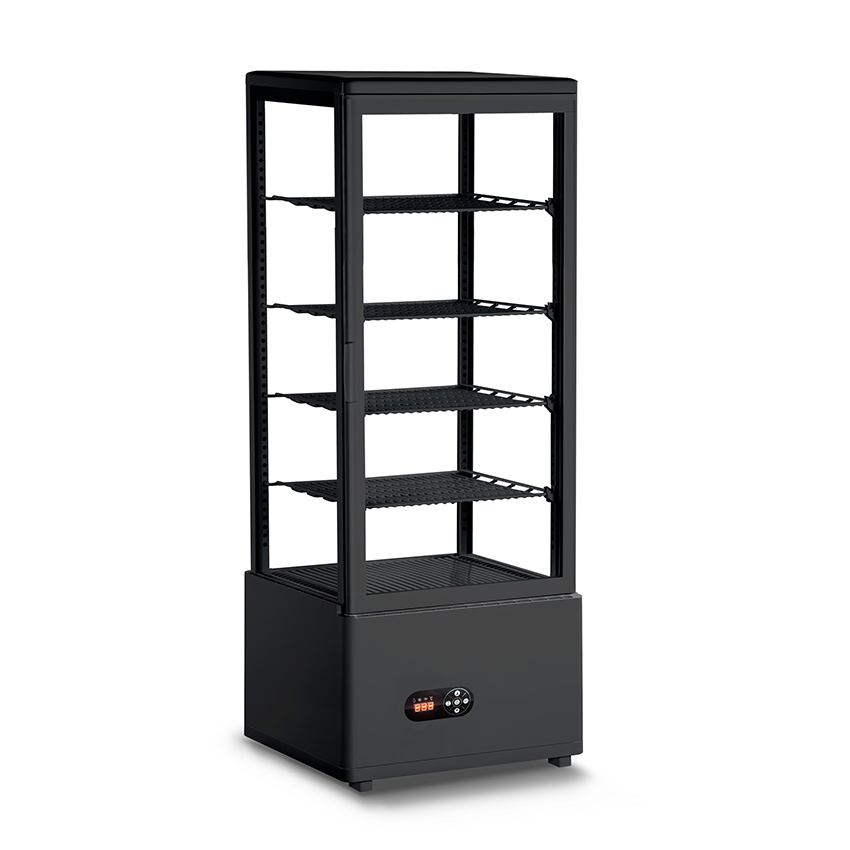
Countertop formats are built for exactly this role when product has already been through a blast chiller: a small footprint on the counter, a low-noise compressor that will not dominate a quiet cafe, and a temperature range suited to pre-chilled food rather than warm trays straight from the oven.
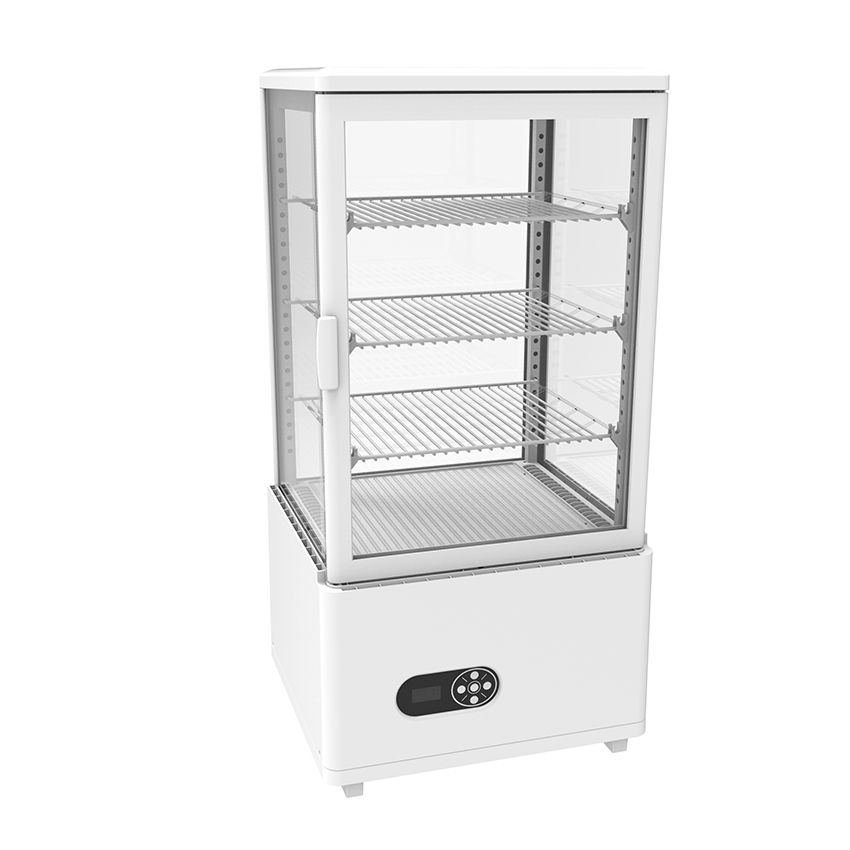 Low noise tabletop refrigerated display cabinetThe tabletop refrigerated display cabinet series offers a variety of models and different volume options. The refrigerated display cabinet uses high-efficiency refrige...View Product →
The practical rule is simple. Chill fast, then hold steady. Equipment bought for one job rarely performs the other well, and a kitchen that tries to use a display cabinet as a chiller will fail its cooling records long before it fails a health inspection.
Zhejiang Fuerj Electric Science And Technology Co., Ltd. was founded in 1997 and mainly produces electric heating products and refrigeration products such as freezers and cake showcases. The company covers an area of 110,000 square meters, with a construction area of 85,500 square meters.
The company has 650 employees, including 85 engineering and technical personnel. More than 160 employees hold a college degree or above, and 35% of the senior leadership team holds a college degree or above with corresponding professional titles. Annual output reaches 750,000 sets of various products, and the range carries GS, CB, RoHS, UL, COC and CCC certification to meet different market requirements. Products are exported to more than 20 countries and regions across Europe, America, Asia and Africa, and the factory also operates as a global electric fireplace production base for Dimplex, which means its refrigeration and heating lines are built around international brand requirements rather than a single domestic market.
Q1. How long does a countertop blast chiller take to cool food?
Most units are specified to take food from about +70 °C to +3 °C in roughly 90 minutes at their rated batch weight. Denser or heavier loads take longer.
Q2. What is the difference between a blast chiller and a blast freezer?
A blast chiller targets about +3 °C for same-day storage; a blast freezer drives the same cabinet to about -18 °C for long-term freezing, usually with a much longer cycle.
Q3. How much food fits in a countertop model?
Common ratings run from 5 kg to 15 kg per cycle. The real limit is tray depth: if food is stacked deeper than the manufacturer allows, the centre will not reach temperature on time.
Q4. Do I still need a blast chiller if I have a walk-in fridge?
For small batches, yes. A walk-in already holding cold stock has little spare capacity, and one hot tray raises the temperature of everything around it.
Q5. What temperature should food be before loading?
The FDA clock starts at 57 °C, so food can go in straight from the range. Many kitchens let it drop slightly first to reduce steam and icing on the evaporator.
Q6. Can a countertop blast chiller run on a standard socket?
Many single-phase models are designed for a 13 A or 16 A supply, but ratings vary. Confirm the amperage and whether a dedicated circuit is required before installation.
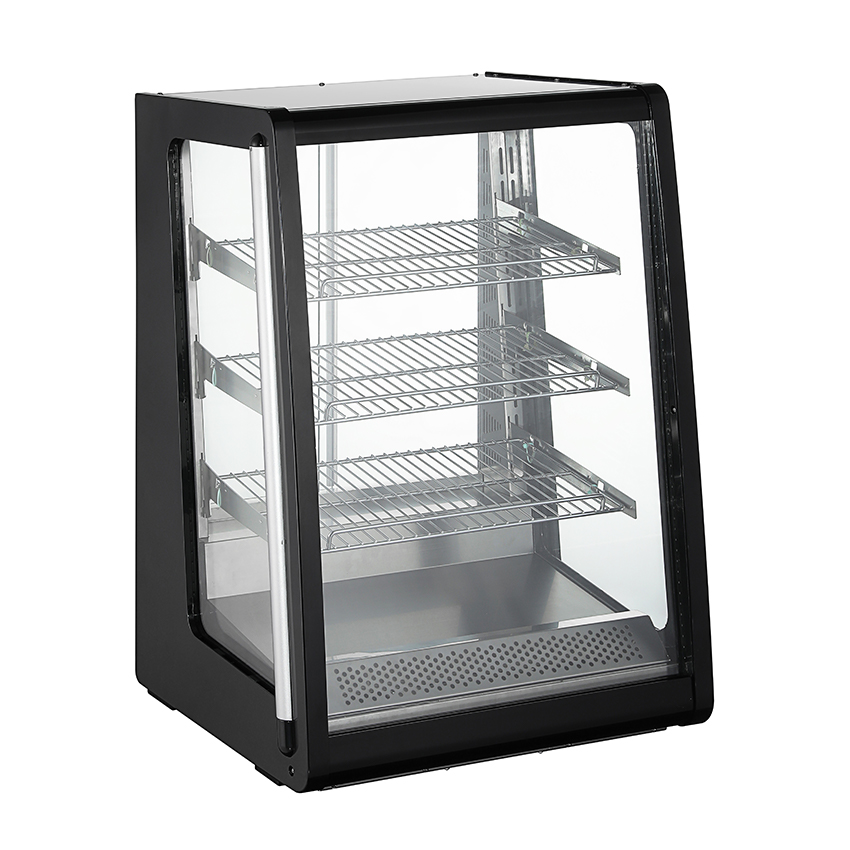

Copyright © Zhejiang Fuerj Electric Science And Technology Co., Ltd. Rights Reserved. Food Showcase Display Manufacturer Fireplace Factory
