 English
 русский
 Español
 Français
 عربى
 italiano

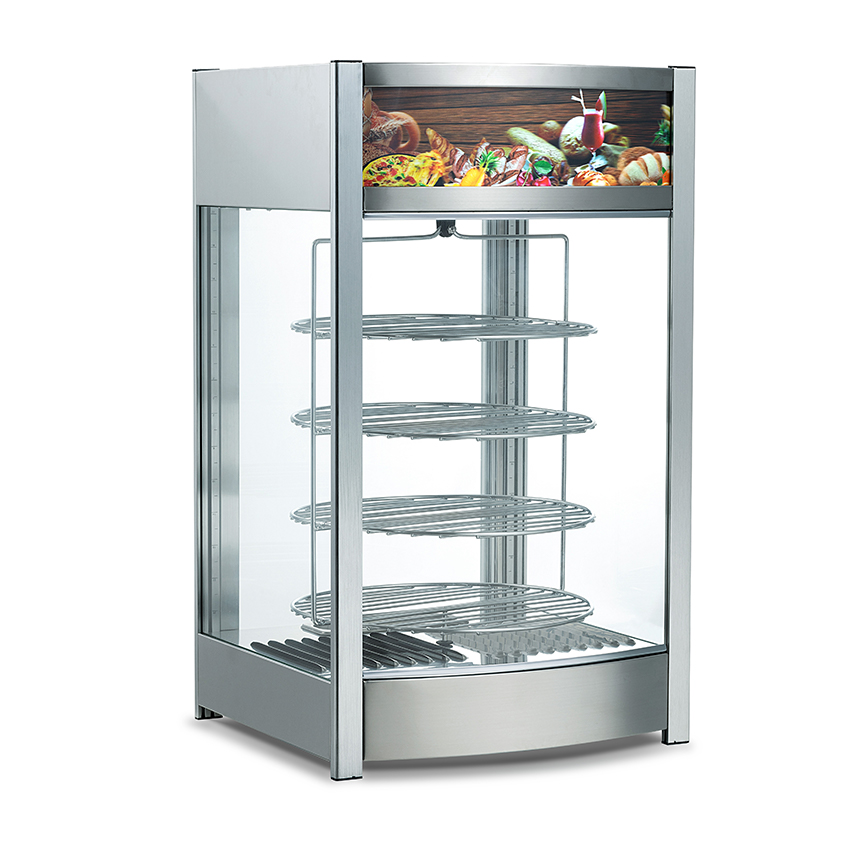
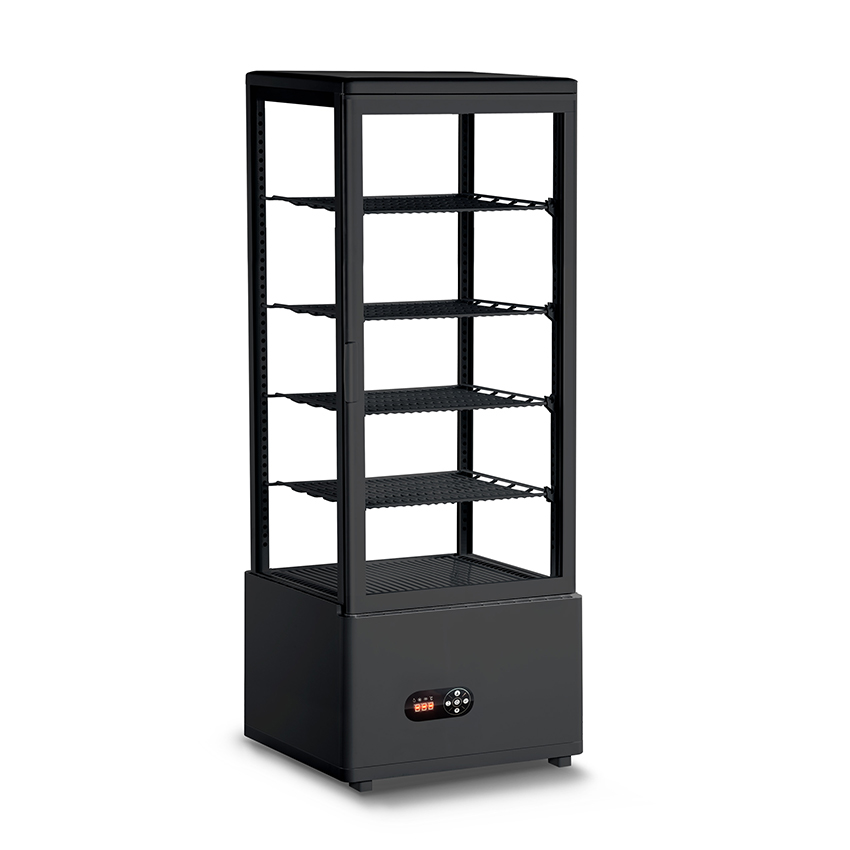
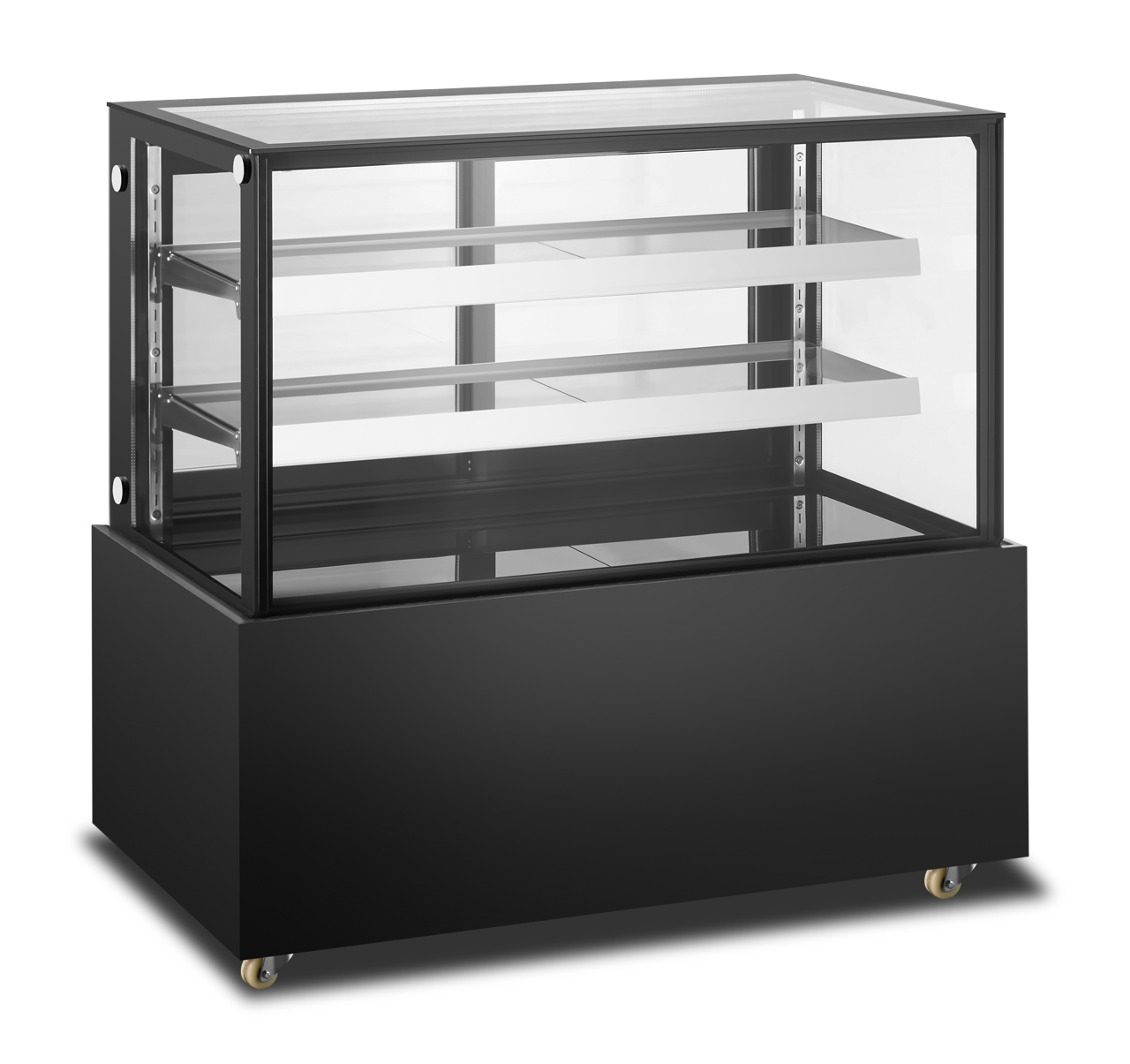
Multi-product thermal display cabinet
The multi-product thermal insulation display cabinet has various sizes, elegant appearance and unique design. It ad...



A bakery owner once described her cake display case as "fine, except in summer". Nothing had actually broken. At midday the glass fogged, the compressor ran without pausing, and the top shelf held several degrees warmer than the bottom. The case was doing exactly what a refrigerated display case does — pulling heat out of a box and pushing cold air across the shelves — but the second half of that job was losing to the room.
That is the practical answer: a commercial refrigerated display case is a sealed vapour-compression loop paired with an air-handling system. The loop moves heat from inside the cabinet to the surrounding room. The air side — fans, ducting, shelf spacing, a glass door or a curtain of moving air — decides where the cold lands and how evenly it covers the product. Most complaints that sound like "the refrigeration is weak" are really air-side problems, and most air-side problems are cheaper to fix than a compressor.
Content
Strip away the stainless steel and the lighting and a display case contains six functional blocks. Each one can fail on its own, and each one leaves a different fingerprint in a temperature log.
Notice that only three of the six blocks are mechanical. The other three are about geometry: where air leaves, how it travels past the product, and how it comes back. A well-built case with a blocked return grill performs worse than a simple case with clean airflow — and that is why two cabinets with identical compressors can hold very different temperatures.
The circuit is a loop, not a one-way process, and the refrigerant changes state twice on every lap.
Two details matter in real installations. First, the evaporator must stay a few degrees colder than the air it is cooling, because heat only moves down a temperature difference: a coil at 0 °C cannot hold a cabinet at 0 °C under load. Second, the coil surface runs below freezing and will frost, so commercial cases schedule a defrost — an electric heater, hot gas, or a timed off-cycle — before ice chokes the airflow. Frosted coils are the most common reason a working case gradually stops cooling, and the fault often shows up first on the display side of the cabinet. Our engineers cover this relationship in more depth in the article on how refrigeration and preservation work together in a display cabinet.
The refrigeration loop is broadly the same across cabinet types. What changes is the way cold air is delivered to the shelves.
An open case has no door. It discharges a thin sheet of cold air from a honeycomb grill at the top and recovers that sheet through a return grill at the bottom. The curtain is only a few centimetres thick, and it works because the cold air is heavier, faster and more organised than the room air it meets. Reach into the cabinet and the curtain breaks; load stock past the marked load line and the curtain is pushed out of the case; stand in front of it with a trolley and the return air is blocked. Temperature then climbs at the front edge first, which is exactly where the most attractive product usually sits.
A door removes the curtain from the equation. Air circulates through internal ducting, the cabinet is far less sensitive to draughts and foot traffic, and energy use drops noticeably because there is no continuous cold spill at the face. The trade-offs move elsewhere: condensation on the glass in humid weather, door-frame heaters that consume power, and the simple fact that every closed door is a small barrier to a shopper browsing on impulse.
Neither design wins outright. A convenience store selling chilled drinks at speed wants an open deck; a patisserie holding cream cakes for six hours wants a door, stable humidity and glass that stays clear.
Cold is not the only variable that decides whether a product survives the display. The temperature band, the moisture in the air and the amount of light heat reaching the surface all matter, and they pull in different directions.
| Typical design targets only. Real setpoints depend on local food-safety rules, product type and shop ambient conditions. | |||
| Cabinet type | Typical air temperature | Common products | What to watch |
| Frozen display | -18 °C to -22 °C | Ice cream, frozen desserts | Ice crystal growth after temperature swings |
| Sushi and fresh case | 0 °C to 4 °C | Sushi, sashimi, cold cuts | Even airflow; avoid direct fan blast on exposed rice |
| Cake and pastry case | 4 °C to 8 °C | Cream cakes, pastries, desserts | Humidity loss and radiant heat from lighting |
| Deli service counter | 1 °C to 4 °C | Cheese, sliced meat, prepared foods | Frequency of door or lid opening |
| Beverage cooler | 2 °C to 7 °C | Bottles, cans, packaged drinks | Pull-down speed and condensation on glass |
Light deserves more attention than it usually gets. LED lighting produces less heat than halogen, but a shelf of cream cakes under bright lamps still collects a warm surface layer, and the thermostat measures air temperature, not the temperature of the cream. An accurate controller with a product-facing sensor, plus dimming or timed lighting, does more for shelf life than an oversized compressor.
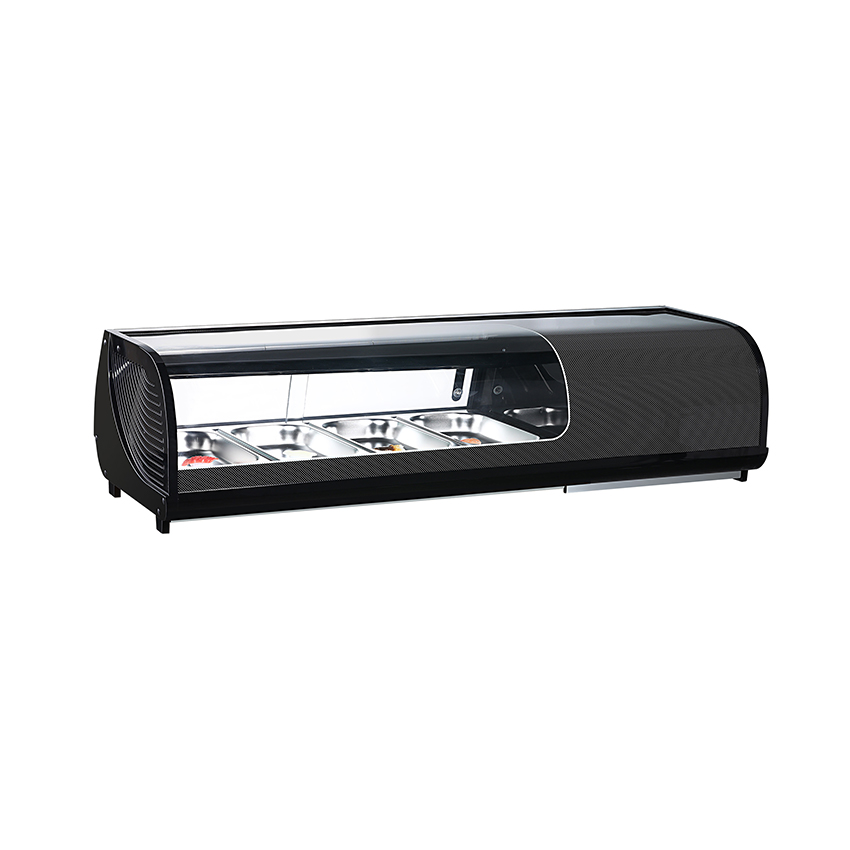
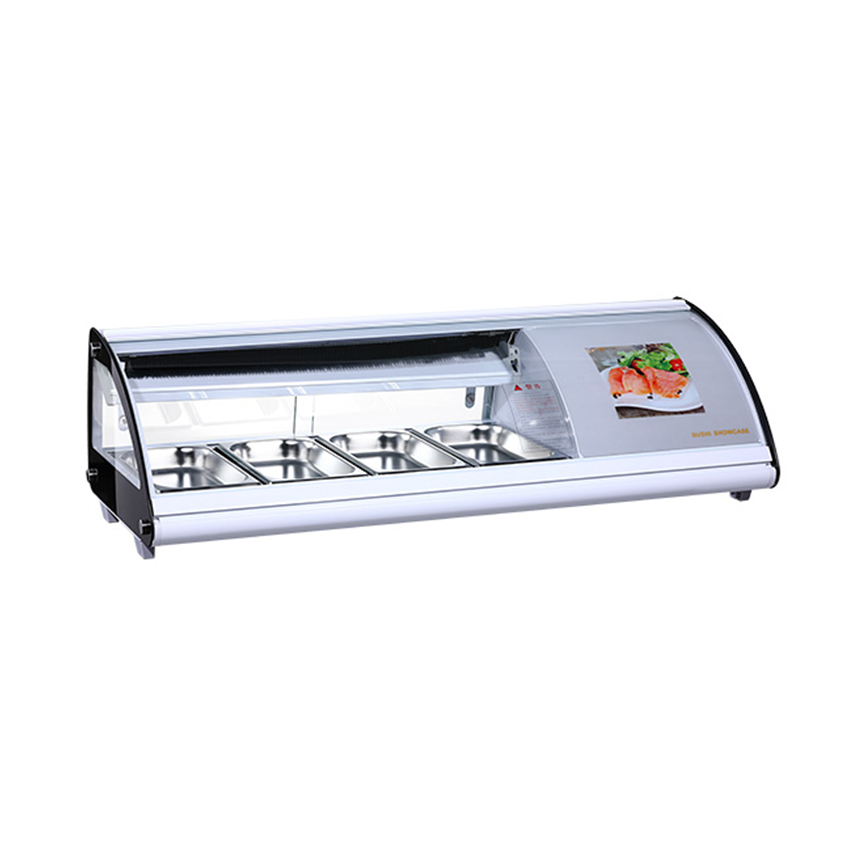 Sushi Display Cabinet with Intelligent Temperature ControlHorizontal refrigerated cabinet for sushi and chilled foods, offering GN-compatible layouts, precise temperature control, and flexible size and style customization for retail and foodservice.View Product →
Refrigeration is the largest electrical load in most food retail spaces. Estimates widely quoted from the U.S. Department of Energy put refrigeration at roughly half of a supermarket's electricity consumption, with display cases taking the biggest share of that figure. Inside a single case, three loads dominate: the compressor, the defrost system, and the fight against heat leaking in through glass, open faces and door frames.
That last point is easy to overlook at the specification stage. A case pushed against a wall with no rear clearance cannot reject condenser heat efficiently, so the compressor runs longer and the shop gets warmer — which makes the compressor run longer still. Door-frame heaters and anti-condensation elements are another hidden load; on a humid day they may draw more power than the lighting. Modern EC evaporator fans, LED strips and better curtain geometry reduce all three loads at once, and they also cut noise, which matters in a shop where staff and customers share the same room.
In practice, the cheapest efficiency upgrade on an existing cabinet is not a new compressor. It is cleaning the condenser coil, restoring rear clearance, replacing torn door gaskets and keeping the return grill free of packaging.
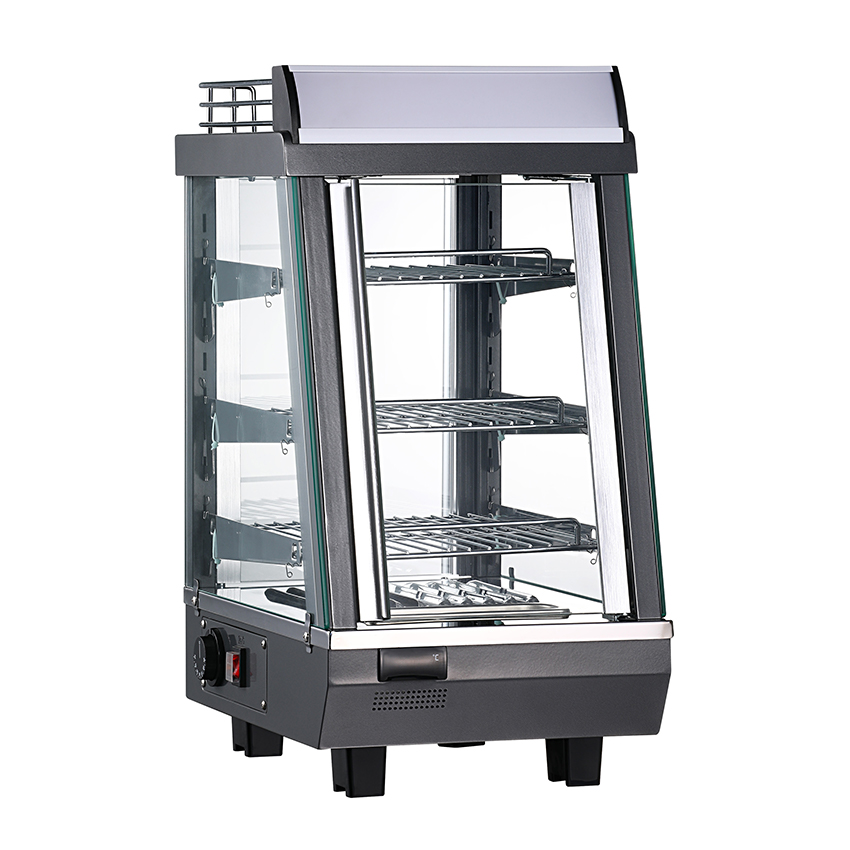
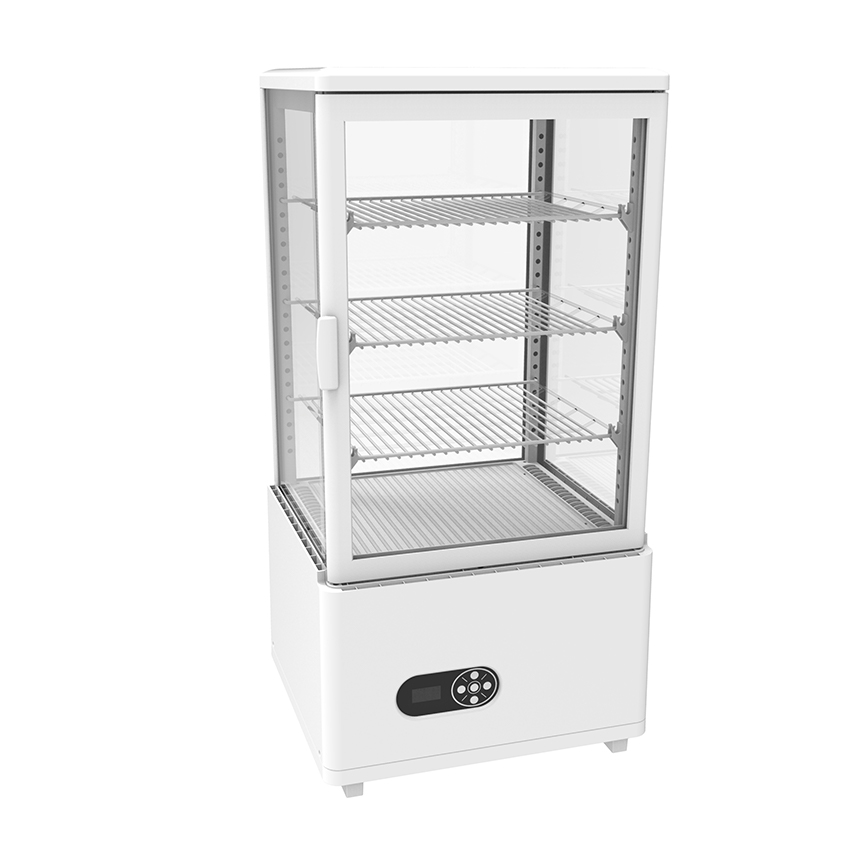 Low-Noise Tabletop Refrigerated Display Cabinet SeriesCompact series with efficient compressors, LED lighting, glass doors, and precise temperature control, designed to reduce operating noise and keep cold food visible and fresh.View Product →
A refrigeration circuit is standard engineering. The differences between a case that performs for ten years and one that disappoints usually sit in the details you can inspect before purchase.
Zhejiang Fuerj Electric Science And Technology Co., Ltd. was founded in 1997 and mainly produces electric heating products and refrigeration products such as freezers and cake showcases. The company covers an area of 110,000 square meters, with a construction area of 85,500 square meters. It employs 650 people, including 85 engineering and technical personnel, and more than 160 staff with a college degree or above. The company has an annual output of 750,000 sets of various products; its products hold GS, CB, RoHS, UL, COC and CCC certification to meet market requirements, and are exported to more than 20 countries and regions in Europe, America, Asia and Africa. Buyers comparing formats can review the wider display freezer range alongside the heating lines before settling on a cabinet size and door configuration.
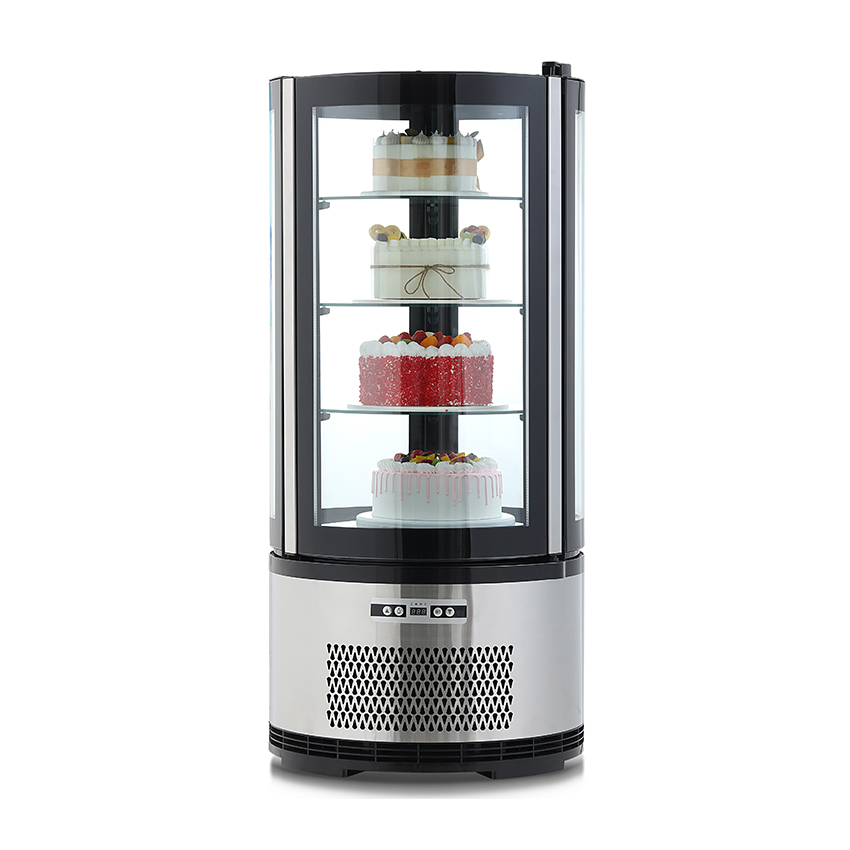
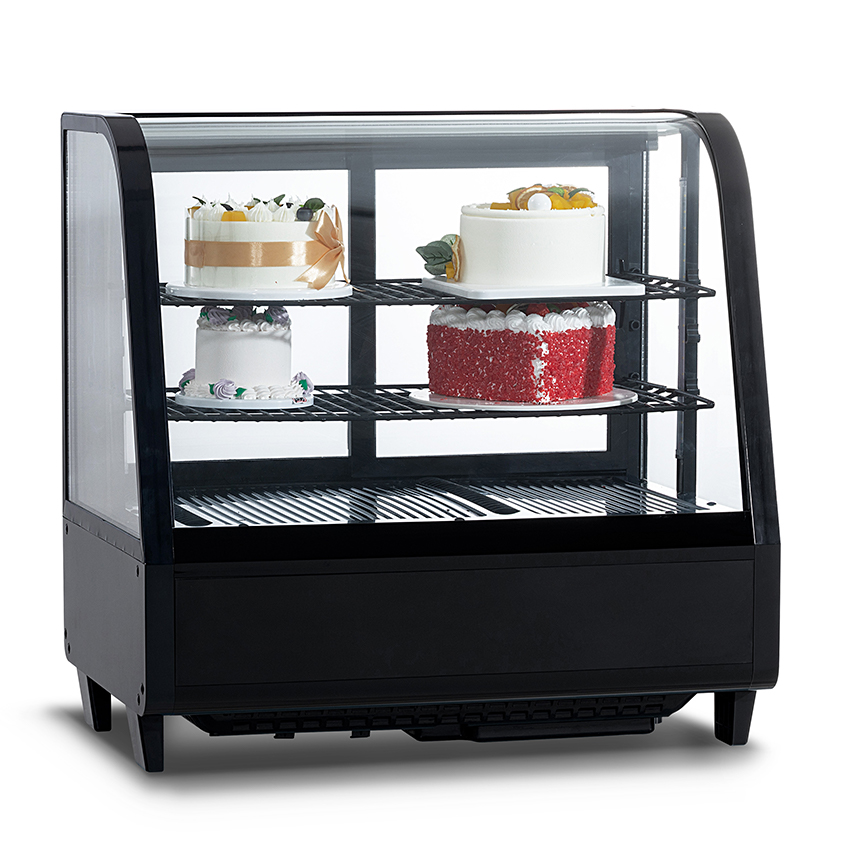 Cake Display Cabinet with LED Lighting and Humidity ControlCommercial showcase for cakes and desserts, combining refrigerated preservation, LED lighting, temperature and humidity control, and customizable sizes and functions for shops, cafes, and supermarkets.View Product →
Most display case faults are diagnosable from the pattern rather than the noise. A few common ones:
Q1. How cold should a commercial refrigerated display case be?
Most chilled cases hold 2 °C to 8 °C depending on the product; frozen cases run at -18 °C or lower. Set the target from your food-safety rules, not from the cabinet's maximum capability.
Q2. Why is the top shelf warmer than the bottom?
Cold air is delivered from the top and warms as it crosses the shelves. If the curtain is broken by overloading or a blocked return grill, the top loses cooling first.
Q3. Does an open case use more energy than a glass door one?
Usually yes, because cold air spills continuously from the open face. A door cuts that loss but adds condensation and a barrier to browsing.
Q4. How often should the condenser be cleaned?
Every one to three months in a busy shop, and more often where flour dust, grease or lint is present. A clogged condenser raises running cost immediately.
Q5. Why does the glass keep fogging up?
Either the anti-condensation heater has failed, the door seal is leaking humid air, or the room humidity is simply high. Check the seal before replacing glass.
Q6. What causes ice build-up inside the cabinet?
A defrost cycle that ends too early, a door left open, or a drain blocked so melt water refreezes. Ice on the coil quickly reduces cooling capacity.
Q7. Can one cabinet hold both cakes and savoury food?
Only if the temperature band and humidity suit both, and cross-flavour transfer is controlled. Many bakeries keep separate cases for cream products and hot-served items.
Q8. How long can food stay in a display case?
That is a food-safety decision based on product type, holding temperature and local regulation — not a cabinet specification. Record temperatures and follow your HACCP plan.
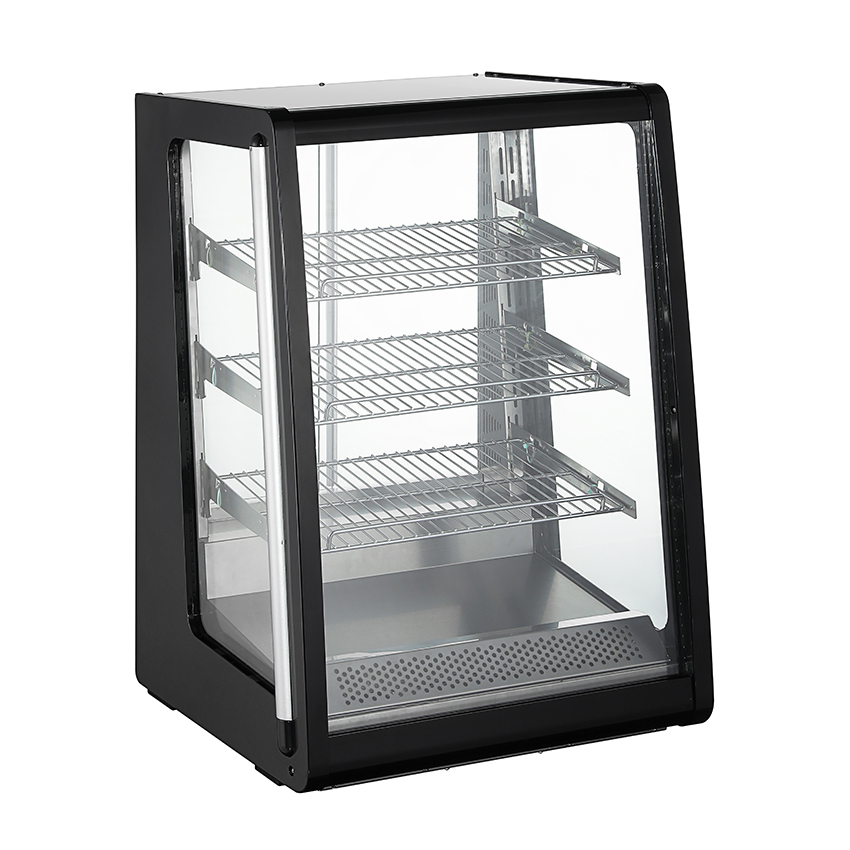

Copyright © Zhejiang Fuerj Electric Science And Technology Co., Ltd. Rights Reserved. Food Showcase Display Manufacturer Fireplace Factory
