 English
 русский
 Español
 Français
 عربى
عربى italiano
Multi-product thermal display cabinet
The multi-product thermal insulation display cabinet has various sizes, elegant appearance and unique design. It ad...



Content
For most importers, choosing the right cake display cabinet comes down to five practical checkpoints: refrigeration stability, glass visibility, cabinet size relative to the retail floor, daily energy draw, and the production capability of the manufacturer behind the unit. A well-built commercial cake display cabinet keeps cream cakes, cheesecakes, and pastries within a stable low-temperature range while giving shoppers a clear, well-lit view of the products inside. Before placing a bulk order, most buyers request technical specification sheets, sample photos of the glass structure, and details on factory production scale, since these factors influence how the unit performs once it reaches its destination market.
The sections below walk through cabinet types, refrigeration behavior, sizing logic, glass and lighting design, sourcing considerations, and maintenance planning, with data visuals included where they help clarify comparisons between cabinet styles.
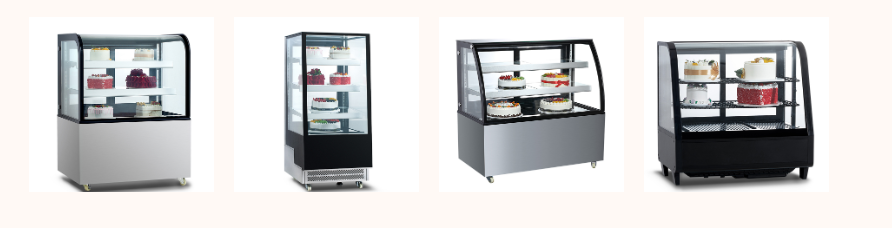
A cake display cabinet is a refrigerated retail fixture designed to hold cakes, pastries, and desserts at a stable temperature while keeping them visible behind glass panels. Unlike a standard reach-in refrigerator, it is built around presentation as much as preservation, combining a cooling system, insulated cabinet body, glass enclosure, and interior lighting into a single unit. Bakeries, cafes, hotels, restaurants, and supermarkets all use some version of this equipment because it lets staff showcase finished products without exposing them to open air, dust, or fluctuating room temperature.
The core function is straightforward: a compressor and evaporator circulate cool air through the cabinet interior, a thermostat or digital controller keeps the range steady, and the glass structure lets customers see the product from multiple angles. A refrigerated cake display cabinet is often the centerpiece of a bakery counter, positioned where foot traffic is highest so that visual merchandising can do part of the selling work.
Common placement locations include bakery storefronts, supermarket bakery sections, hotel breakfast and banquet areas, coffee shop counters, and dessert cafes. In each setting, the cabinet is expected to run continuously during business hours, which is why cooling consistency and build quality tend to matter more than decorative details alone.
Importers generally choose between a handful of structural formats, each suited to different store layouts and product ranges. A glass cake display cabinet with curved panels tends to suit boutique bakeries focused on visual merchandising, while flat-glass models are common in higher-volume supermarket bakery sections where cleaning speed and shelf capacity take priority.
| Cabinet Type | Glass Style | Best Suited For | Typical Range |
|---|---|---|---|
| Curved Glass Cabinet | Curved front panel | Boutique bakeries, cafes | 2 to 8 Celsius |
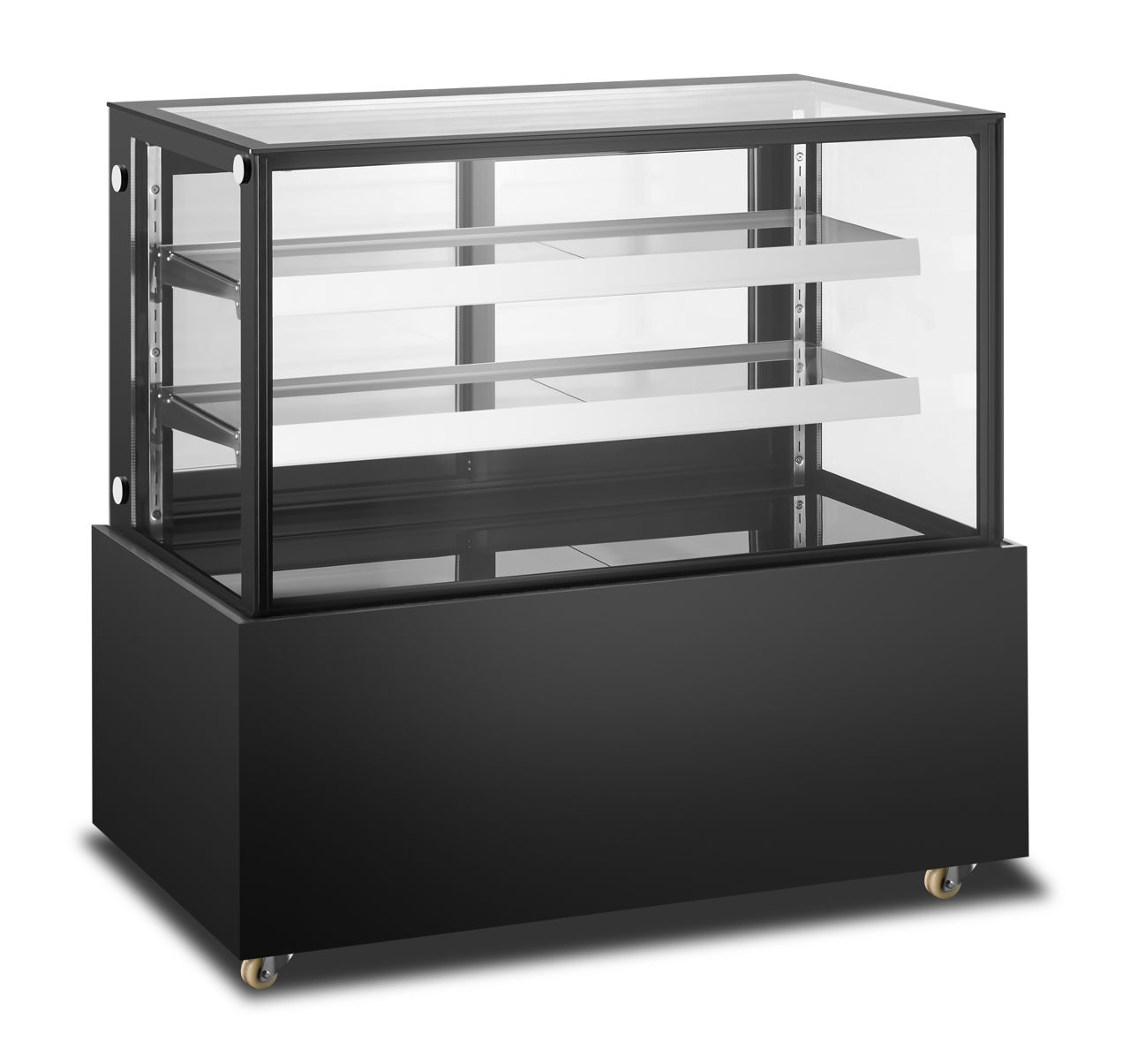
| Straight Glass Cabinet | Flat front panel | Supermarket bakery counters | 2 to 8 Celsius |
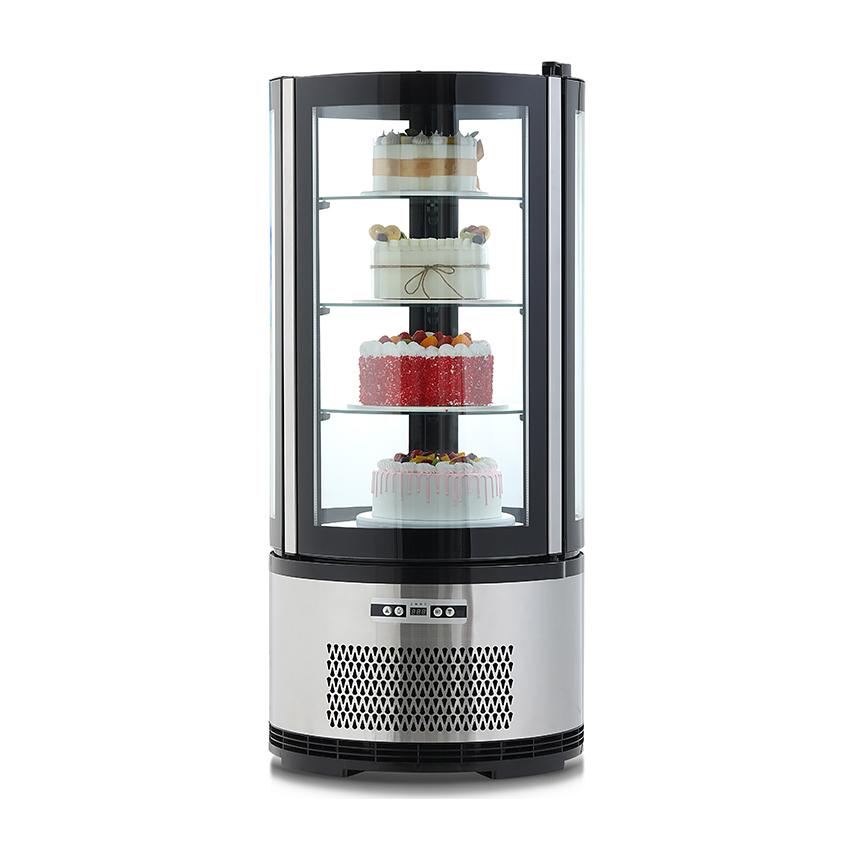
| Cake Tower Display | Full glass column | Wedding and specialty cakes | 2 to 6 Celsius |
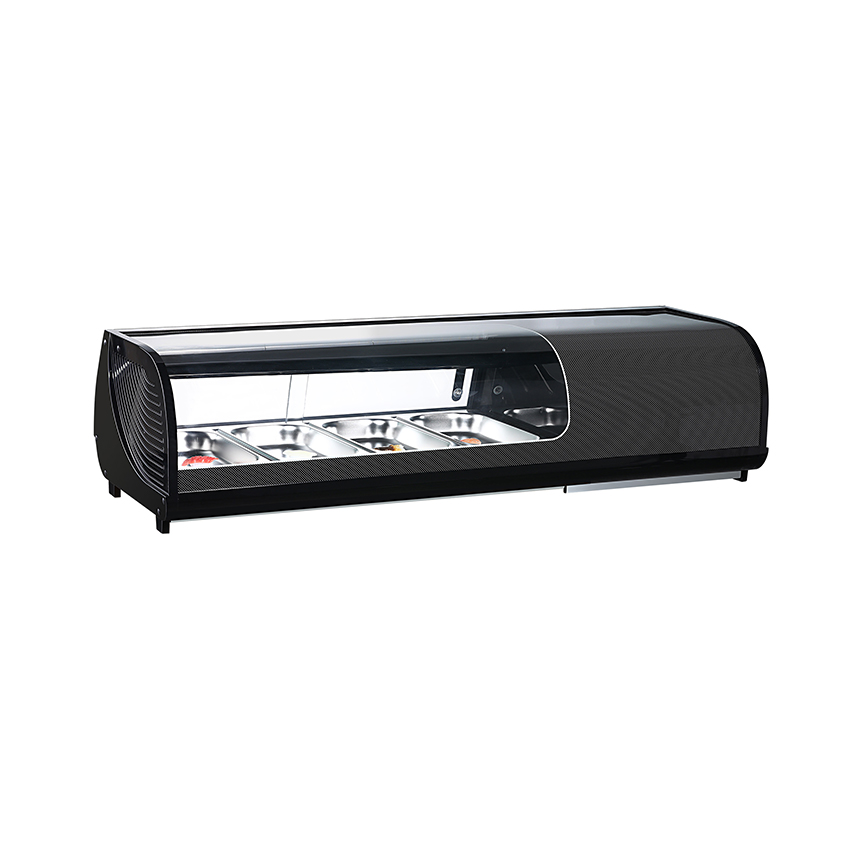
| Countertop Cabinet | Compact glass box | Small cafes, kiosks | 2 to 8 Celsius |
| Combination Bakery Case | Multi-section glass | Full-service bakeries | 0 to 8 Celsius |
Figure 1: Illustrative distribution of cabinet formats requested by bakery and cafe retailers
The refrigeration system is the functional core of any refrigerated cake display cabinet. Most units rely on a sealed compressor system paired with a forced-air or static cooling method, controlled through a digital thermostat that allows staff to set and monitor the interior range. Forced-air circulation tends to keep temperature more even across shelves, which matters when a cabinet holds several tiers of product at once.
A stable cooling curve is often more important than the lowest possible temperature. Cakes with fresh cream or fruit toppings respond poorly to sharp temperature swings, which can cause condensation on the glass or texture changes in the frosting. Digital controllers with a narrow tolerance band, automatic defrost cycles, and alarm indicators for door-open events help maintain a more consistent environment throughout the day.
Figure 2: Typical interior temperature pattern over a 24 hour operating cycle, measured in Celsius
Cabinet length is usually chosen based on daily product turnover rather than available floor space alone. A cafe selling a modest daily rotation of cakes may only need a compact unit, while a full-service bakery with a wide product range typically requires a longer cabinet with multiple shelf tiers. Ordering a size that is too small often leads to overcrowding and reduced airflow, which can affect cooling performance across the cabinet.
Figure 3: Approximate whole-cake display capacity by cabinet length category
As a general planning approach, many bakery operators reserve roughly seventy percent of shelf capacity for standard daily items and leave the remainder open for seasonal or promotional products, which helps avoid a cramped presentation during busy periods.
Curved glass and straight glass cabinets are the two most frequently ordered formats, and each performs differently across a few practical dimensions. The radar comparison below illustrates general tendencies rather than fixed values, since actual performance depends on the specific model and manufacturer.
Figure 4: General performance comparison between curved and straight glass cabinet formats
The glass enclosure of a glass cake display cabinet influences how customers perceive the product on display, and also determines how much daily cleaning the unit requires. Curved glass tends to create a softer, more open sightline, while flat glass panels are generally easier to wipe down and replace if damaged. Double-glazed or hollow glass structures also help reduce condensation buildup, since they limit temperature transfer between the cold interior and the warmer room air outside.
Interior lighting plays a meaningful role in how a cake display cabinet presents its contents. Most current models use LED strip lighting mounted along the shelf edges or top panel, since LEDs produce relatively low heat compared with older lighting types, which helps the refrigeration system work less to offset warmth inside the case. Adjustable brightness and a neutral to warm color temperature are commonly requested, as overly cool white lighting can make cream-based cakes look less appetizing.
Shelf-level lighting also allows lower tiers to remain as visible as the top shelf, which matters in taller cabinets where lighting from a single source at the top can leave lower rows dim by comparison.
Not every product held inside a commercial cake display cabinet needs the same temperature setting. Cream-based cakes generally require a colder environment than dry pastries, and mismatched settings can shorten how long a product looks and tastes fresh on display.
| Product Type | Recommended Range | Typical Display Window |
|---|---|---|
| Fresh Cream Cakes | 2 to 5 Celsius | Same day to two days |
| Cheesecake | 2 to 6 Celsius | Two to three days |
| Chocolate Cake | 4 to 8 Celsius | Two to four days |
| Fruit Tarts | 2 to 5 Celsius | Same day to two days |
| Pastries and Puff Items | 6 to 10 Celsius | Two to three days |
Insulation quality, compressor type, and door design all affect how much energy a cabinet consumes across a full day of operation. Sliding glass doors on the rear service side tend to limit warm air exchange better than fully open service access, which in turn reduces how often the compressor cycles on. Cabinets placed away from direct sunlight, kitchen exhaust vents, or heating equipment also tend to run more efficiently, since ambient heat forces the compressor to work harder to maintain the set range.
Importers working with an overseas cake display cabinet supplier often run into a handful of recurring issues that are worth planning for early. Voltage and plug compatibility differ between regions, so confirming electrical specifications before production begins helps avoid rework after the shipment arrives. Climate differences also matter, since a cabinet destined for a humid coastal market may need different sealing and insulation than one shipped to a drier inland region.
Packaging strength is another frequent concern, particularly for glass panels traveling long distances by sea freight. Reinforced corner protection, foam padding around glass edges, and moisture-resistant wrapping around the compressor unit all help reduce the chance of transit damage. Clear communication about destination climate, local voltage standards, and intended installation space allows a bakery display cabinet manufacturer to adjust production specifications before the order is finalized rather than after delivery.
Not every factory offering a commercial bakery showcase operates at the same production scale or with the same level of engineering support. Importers typically look at a few practical indicators before committing to bulk orders, since these details tend to reflect how consistently a factory can deliver at volume.
A bakery showcase refrigerator built by a factory with an established engineering team tends to show more consistency across a large order, since design adjustments and quality checks are handled internally rather than outsourced to multiple third parties.
Where a cabinet is placed within a store affects both its cooling performance and its lifespan. Keeping the unit away from direct sunlight, doorways with frequent temperature swings, and heat-generating kitchen equipment helps the compressor maintain a steadier workload. Leaving clearance space around the rear ventilation panel also allows heat generated by the compressor to dissipate properly rather than building up inside the machine compartment.
Wiping down glass panels daily, checking door gaskets for gaps every few weeks, and cleaning the condenser coil on a regular schedule are among the simplest habits that extend a cabinet's working life. A bakery display refrigerator that receives consistent basic maintenance generally holds its temperature range more reliably over time compared with one that is only serviced when a problem appears.
Zhejiang Fuerj Electric Science And Technology Co., Ltd. was founded in 1997 and produces electric heating and refrigeration equipment, including freezers and cake showcases. The company operates across a 110,000 square meter site with a construction area of roughly 85,500 square meters, supported by a workforce of 650 employees, including 85 engineering and technical personnel. More than 160 staff members hold a college degree or above, contributing to product development and production planning.
As a bakery display cabinet manufacturer and cake display cabinet supplier, the company maintains an annual output of approximately 750,000 units across its product range and exports to more than 20 countries and regions across Europe, America, Asia, and Africa. The company accepts bulk customization requests from importers, adjusting dimensions, glass configuration, and interior layout based on buyer specifications for a given retail market.

|
Q1. What is a cake display cabinet It is a refrigerated retail fixture with glass panels used to store and present cakes and pastries at a stable, cool temperature while keeping them visible to customers. |
Q2. What is a cake display refrigerator This is generally another term for the same equipment category, referring to a cooled glass case used specifically for displaying bakery items in a retail setting. |
|
Q3. What is the difference between a bakery showcase and a cake display cabinet A bakery showcase can include dry, unrefrigerated display cases for bread and baked goods, while a cake display cabinet typically includes active refrigeration for perishable items. |
Q4. How does a cake display cabinet work A compressor and evaporator circulate cool air through the insulated cabinet, while a digital thermostat maintains the set temperature and LED lighting illuminates the products inside. |
|
Q5. How much does a cake display cabinet cost Cost depends on cabinet size, glass configuration, refrigeration system, and added features such as lighting, so most buyers request a quotation based on their specific requirements. |
Q6. Where to buy commercial cake display cabinets Many buyers work directly with manufacturers that offer bulk customization, which allows dimensions, glass style, and interior layout to be adjusted for a specific market. |
|
Q7. How long can cakes stay fresh in a display cabinet This varies by cake type, but cream-based cakes are generally best displayed for one to two days, while sturdier items such as chocolate cake can last a few days longer. |
Yes, cheesecake is commonly displayed in these cabinets, typically within a slightly cooler range than standard cream cakes to help maintain its texture. |
|
Q9. Can chocolate cakes be stored in a display cabinet Chocolate cakes can be stored in these cabinets, generally within a moderate cool range that avoids the frosting becoming too firm or losing its texture. |
Q10. Can pastries be displayed alongside cakes Pastries can be displayed in the same cabinet, though some operators prefer a slightly warmer shelf zone or a separate section to suit drier baked items. |

Copyright © Zhejiang Fuerj Electric Science And Technology Co., Ltd. Rights Reserved. Food Showcase Display Manufacturer Fireplace Factory
