 English
 русский
 Español
 Français
 عربى
عربى italiano
Multi-product thermal display cabinet
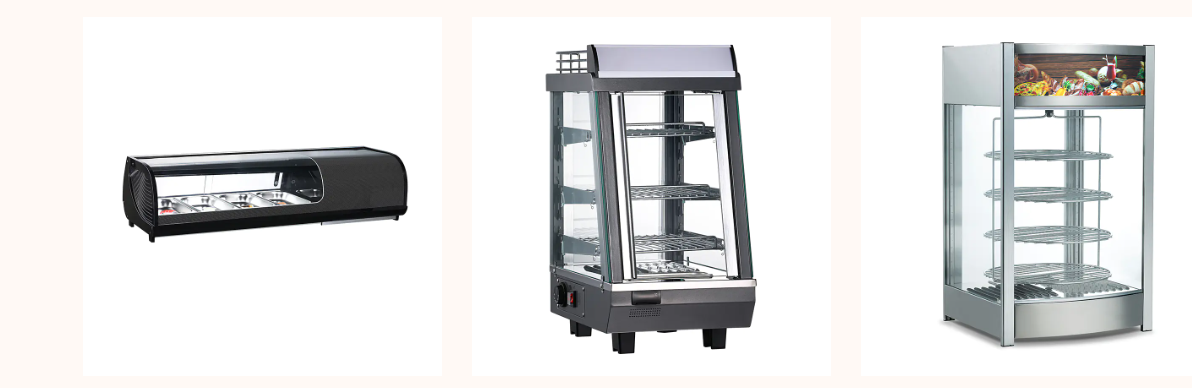
The multi-product thermal insulation display cabinet has various sizes, elegant appearance and unique design. It ad...



Content
A reliable table hot cabinet holds prepared food at a safe serving temperature without drying it out, and the right unit comes down to matching seven practical factors to how a kitchen actually runs. Before placing an order for a commercial food warming cabinet or a restaurant food warmer, most kitchen teams review the following points in this general order.
Each of these seven factors is explained below with comparison data that shows how the choices affect daily holding performance in a working kitchen.
A table hot cabinet is a countertop or freestanding piece of equipment that keeps cooked food within a safe holding temperature range between the kitchen and the point of service. Unlike an open steam table, a fully enclosed cabinet traps radiant heat and moisture around the food pans, which slows moisture loss and keeps textures closer to how the dish left the kitchen. Many kitchens refer to the same category of equipment as a hot holding cabinet, a kitchen table hot cabinet, or simply a dining table hot cabinet depending on where it sits along the service line.
Some current desktop models combine both refrigeration and heating functions in a single housing, letting staff switch between chilled storage and active holding without moving pans between two separate pieces of equipment. Controls are typically limited to a small set of functions, start, stop, temperature adjustment, and a defrost cycle, so new staff can operate the unit correctly after a short walkthrough. An intelligent energy-saving mode is also common on newer units, automatically adjusting operating parameters based on how often the cabinet door opens and how much load is inside.
Table hot cabinets appear across a wide range of foodservice settings, not only in full-service restaurants. Buffet-style dining rooms rely on them heavily because guests serve themselves over an extended window, hotel banquet kitchens use them to bridge large batch cooking with staggered plating times, and cafeterias depend on them to keep multiple dishes ready during a defined meal period. Smaller operators, including catering businesses and even a compact food warming cabinet for home use in a family-run kitchen, follow the same underlying logic on a smaller scale.
Figures reflect a general pattern commonly observed across foodservice operations and are shown for illustration rather than a formal survey result.
Capacity is the first practical filter most kitchens apply, since a cabinet that is too small forces staff to refill pans constantly during peak hours, while an oversized unit wastes counter space that is often at a premium near a pass or service line. A small commercial hot holding cabinet built around two to four full-size pans generally suits cafes, small buffet counters, and single-station catering setups. Mid-size units holding six to eight pans work well for hotel breakfast lines and casual dining restaurants running several hot items at once, while larger banquet operations sometimes need multiple cabinets working in parallel rather than a single oversized unit.
| Kitchen Type | Typical Pan Count | Common Cabinet Style |
|---|---|---|
| Small cafe or counter | 2 to 4 pans | Countertop table hot cabinet |
| Casual dining restaurant | 4 to 6 pans | Freestanding hot holding cabinet |
| Hotel breakfast or buffet line | 6 to 8 pans | Multi-tier commercial hot cabinet |
| Banquet or catering hall | 8 pans or more | Multiple linked cabinets |
Beyond raw pan count, measure the actual counter depth and door clearance around the intended location. A cabinet that cannot fully open its doors against a wall or a neighboring piece of equipment slows staff down during service, which defeats the purpose of holding food close to the pass in the first place.
How a cabinet generates and controls heat has a direct effect on food texture over a long holding period. Dry heat elements warm the air inside the cabinet, which suits breaded and fried items that need to stay firm, while moist heat or humidity-assisted systems add a small amount of water vapor to protect items such as rice, sauced proteins, and steamed vegetables from drying out. Most current commercial food warming cabinet models allow the holding temperature to be set somewhere in the range of roughly 140 to 185 degrees Fahrenheit, which covers the practical window used for holding cooked food before service.
Control precision matters as much as the heating method itself. A basic thermostat cycles the heating element on and off around a wider band, which can let the interior temperature drift several degrees between cycles. A digital or microprocessor-based control instead reads the interior temperature continuously and makes smaller, more frequent adjustments, which keeps the holding environment closer to the set point across an entire shift.
A more precise controller keeps the interior temperature closer to the set point across a full shift instead of drifting between cycles.
The interior and exterior material of a cabinet determines how it holds up against daily washdowns, food acids, and constant temperature cycling. Stainless steel 304 is the material most commonly specified for interior liners and food contact surfaces because it combines corrosion resistance with a smooth, easy to wipe surface that does not hold odors from previous batches of food. Lower grade steels can be used for outer panels on some entry-level units, but they are more prone to surface staining over time when exposed to repeated moisture.
| Material | Corrosion Resistance | Typical Placement |
|---|---|---|
| Stainless steel 304 | High | Interior liner, pan rails, food contact areas |
| Stainless steel 201 | Moderate | Outer cabinet body on select models |
| Coated carbon steel | Lower | Non food contact frame components |
| Tempered glass | Not applicable | Display doors and viewing panels |
Beyond the metal grade, check the quality of the door hinges, gasket seals, and pan rail welds. A cabinet built with food-grade materials throughout and smooth, seamless interior corners is easier to sanitize thoroughly and tends to show less wear after months of continuous service compared to a unit with exposed seams or lower grade fasteners.
Insulation thickness and quality directly affect how much heat a cabinet loses every time a door opens, and how hard the heating element has to work to recover afterward. A well insulated commercial hot cabinet with a dense foam or mineral wool core between its inner and outer panels holds heat close to the food and loses far less warmth during a quick door opening than a thinly insulated unit relying mainly on the heating element to compensate.
Bar height represents the approximate degree drop in interior temperature after the cabinet door is opened for a short period, based on general equipment testing patterns.
Thicker insulation also reduces the amount of heat radiating outward into the surrounding kitchen area, which keeps the exterior panels cooler to the touch and makes the cabinet more comfortable to place near a busy pass station where staff pass by repeatedly during service.
An electric warming cabinet that runs for extended hours every day benefits from features that reduce unnecessary energy draw without compromising holding temperature. Many current units include a standby or eco mode that lowers heating output slightly during slower periods and ramps back up automatically once the door sensor detects renewed activity or a drop in interior temperature.
A cabinet that automatically adjusts its heating cycle to actual kitchen activity typically runs cooler on the exterior and places less continuous demand on the electrical circuit it shares with other kitchen equipment.
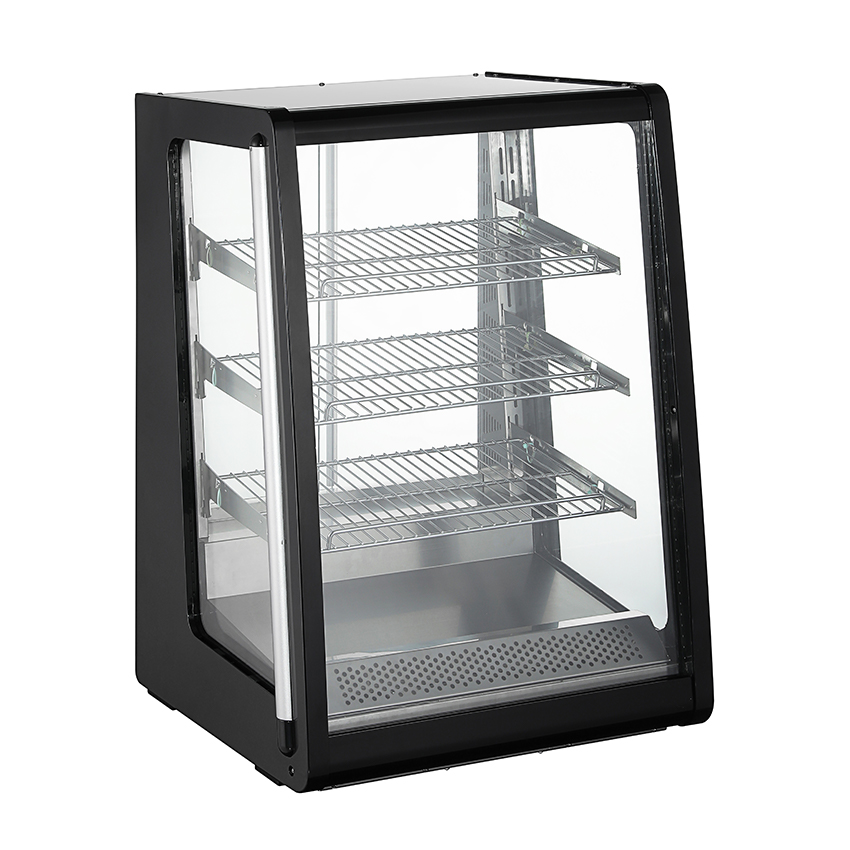
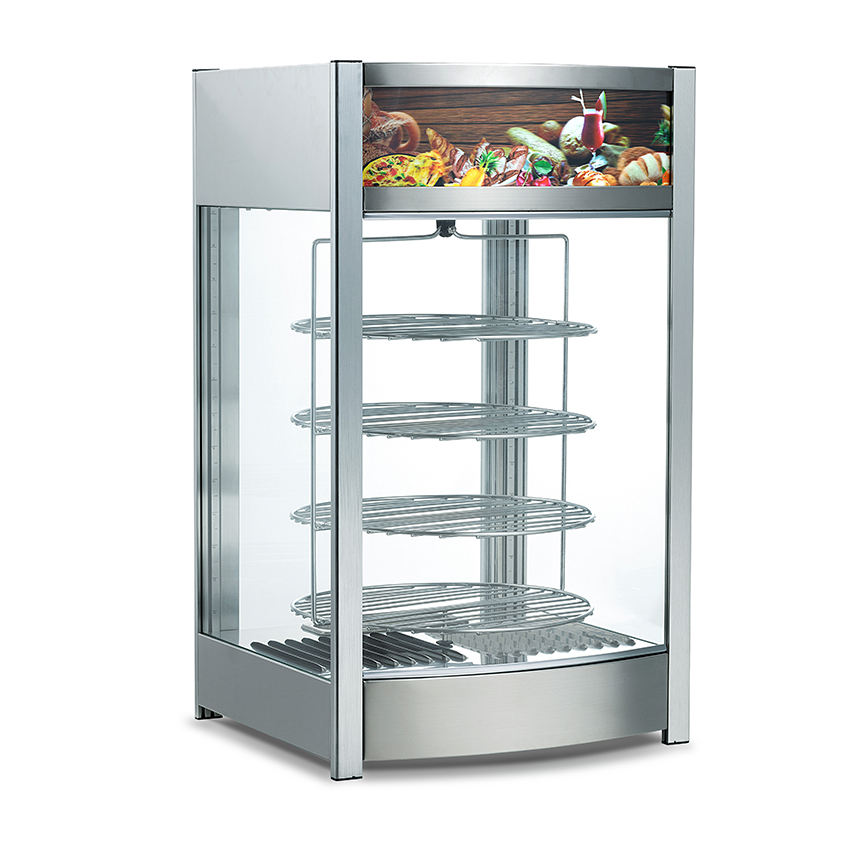
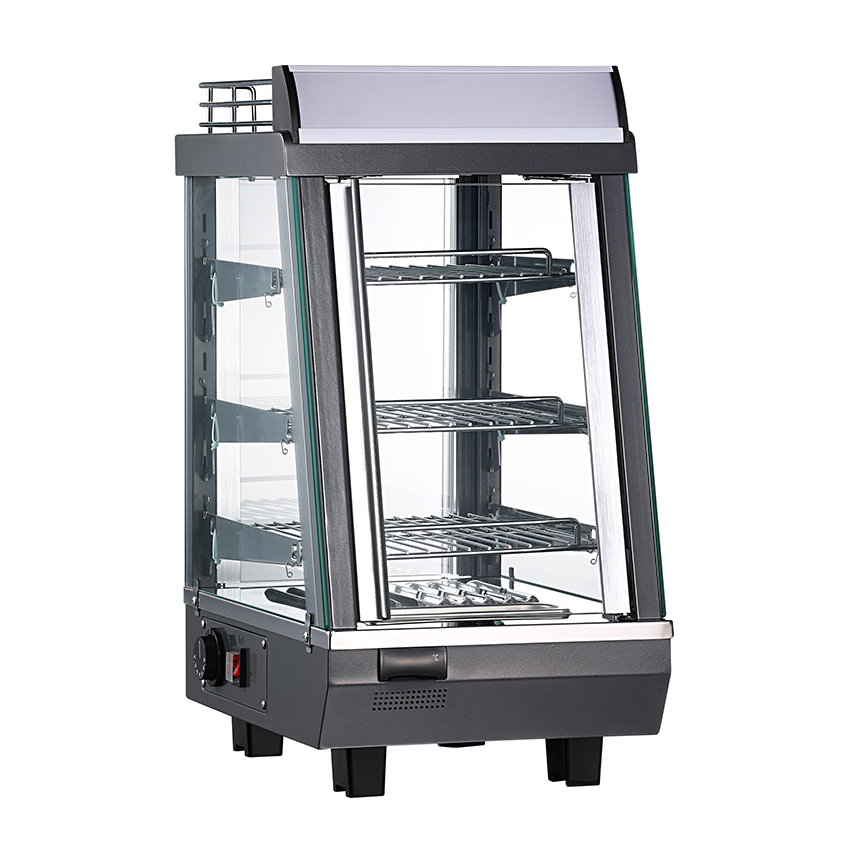
Cabinet style affects both how food is presented and how much floor or counter space the unit occupies. A compact table hot cabinet designed for countertop placement suits kitchens with limited floor space and a shorter service window, while a freestanding Commercial hot food holding cabinet offers a larger capacity for continuous service. A Glass table hot cabinet adds a viewing panel so guests can see the food being held, which works well for self-service buffets and bakery style counters where visual presentation influences what guests choose.
Warming drawer values are shown in the lighter shade for reference; each equipment style trades visibility and capacity for a smaller footprint in different ways.
A warming drawer, often installed under a counter, offers the smallest footprint and works well for back of house holding where visibility to guests is not a priority. A Kitchen table hot cabinet positioned in a central prep area, by contrast, balances moderate capacity with easy staff access from multiple sides.
Menus and kitchen layouts vary widely, so many operators look for a custom food warming cabinet for restaurants rather than a fixed configuration. Common adjustments include pan rail spacing to fit specific pan sizes, door configuration on the left or right side to match traffic flow, and interior tier count to separate different food categories such as proteins, starches, and sauces within the same unit.
Manufacturers that accept bulk customization by customers can typically combine several of these adjustments into a single production run, which is useful for restaurant groups standardizing equipment across multiple locations while still adapting each unit slightly to a specific kitchen footprint.
Restaurants sometimes weigh a table hot cabinet against other holding equipment already familiar from commercial kitchen supply catalogs. The comparison below summarizes the practical differences in typical use.
| Equipment Type | Best Suited For | Guest Visibility | Mobility |
|---|---|---|---|
| Table hot cabinet | General restaurant holding | Low to moderate | Moderate |
| Hot Holding Cabinet | Banquet and catering volume | Low | High with casters |
| Warming drawer | Under counter back of house | None | Fixed |
| Glass display cabinet | Self-service buffet counters | High | Moderate |
Equipment consistency depends heavily on the production scale and technical background of the manufacturer building it. Zhejiang Fuerj Electric Science And Technology Co., Ltd, established in 1997, has spent over two decades producing electric heating and refrigeration equipment, including freezers, cake showcases, and table hot cabinets for the commercial kitchen sector. The facility covers an area of 110,000 square meters, with a built construction area of roughly 85,500 square meters dedicated to production and testing.
The company employs around 650 staff, including 85 engineering and technical personnel focused on product design and quality consistency across production runs. More than 160 employees hold a college degree or above, and a meaningful share of the senior leadership team brings long standing professional experience in the electric heating and refrigeration equipment field, which supports ongoing product refinement rather than a single fixed design.
As a commercial table hot cabinet manufacturer and stainless steel food warming cabinet supplier, the company reports an annual output of roughly 750,000 sets across its various product lines, with shipments reaching more than 20 countries and regions across Europe, the Americas, Asia, and Africa. This scale allows both standard configurations and bulk customization requests to move through the same production infrastructure.
Routine cleaning keeps a table hot cabinet performing consistently and protects the stainless steel surfaces from long term staining or odor buildup. A simple daily and periodic routine covers most of what a busy kitchen needs.
Consistent cleaning also helps preserve the corrosion resistance built into Stainless steel 304 surfaces, since leftover salt, acid, or sauce residue left in contact with metal for extended periods is what typically causes surface staining over time, not the material itself.
Q1: What is a table hot cabinet used forIt keeps cooked food at a safe serving temperature between the kitchen and the point of service, reducing moisture loss and keeping dishes ready for continuous plating. |
Q2: How long can food stay warm in a hot holding cabinetHolding time depends on the dish, but most kitchens plan for a service window of a few hours before quality begins to decline, refreshing pans as needed during longer shifts. |
Q3: What temperature should a commercial food warmer maintainMost units are set somewhere in the range of roughly 140 to 185 degrees Fahrenheit, adjusted according to the specific food category being held. |
Q4: Can a table hot cabinet be customized for restaurantsYes, pan rail spacing, door configuration, tier count, and exterior finish can generally be adjusted to fit a specific menu and kitchen layout. |
Q5: What materials are used for commercial hot cabinetsInteriors are commonly built from Stainless steel 304 for its corrosion resistance and food-grade surface, while some exterior panels use lighter grade steel or tempered glass for display models. |
Q6: What is the difference between a hot cabinet and a warming drawerA hot cabinet generally offers more capacity and a larger footprint, while a warming drawer fits under a counter and suits back of house holding where guest visibility is not needed. |
Q7: How to clean and maintain a table hot cabinetWipe interior panels daily once cooled, empty water trays after each shift, and check door gaskets and hinges periodically to keep the seal and heat retention consistent. |
Q8: Does a food warming cabinet affect food qualityA well insulated cabinet with accurate temperature control helps preserve texture and moisture, while inconsistent temperature or extended holding beyond the recommended window can gradually affect quality. |

Copyright © Zhejiang Fuerj Electric Science And Technology Co., Ltd. Rights Reserved. Food Showcase Display Manufacturer Fireplace Factory
