 English
 русский
 Español
 Français
 عربى
عربى italiano
Multi-product thermal display cabinet
The multi-product thermal insulation display cabinet has various sizes, elegant appearance and unique design. It ad...



Content
A commercial refrigerated display cabinet is a cooling unit built for supermarkets, convenience stores, bakeries and restaurants that keeps perishable products cold while keeping them visible to shoppers. Most units are designed to hold an internal temperature between roughly 2 and 8 degrees Celsius depending on the food category, and they are built for continuous daily operation rather than the occasional door opening typical of a home kitchen appliance.
Unlike a household unit, a commercial display refrigerator has to withstand frequent door openings, long operating hours and a constant cooling load from store lighting and foot traffic near the case. This is why the internal fan systems, insulation panels and door seals used in a refrigerated display case are engineered differently from residential equipment, with a stronger focus on airflow recovery and consistent temperature holding after every access point.
Retailers rely on a refrigerated display cabinet for two connected purposes at once. The first is food safety, keeping dairy, meat, beverages and prepared items within a safe holding range. The second is merchandising, since an open or glass fronted cabinet lets customers see the product clearly, which supports impulse purchases near checkout counters and along main aisles. Choosing the right configuration means balancing both goals rather than treating them separately.
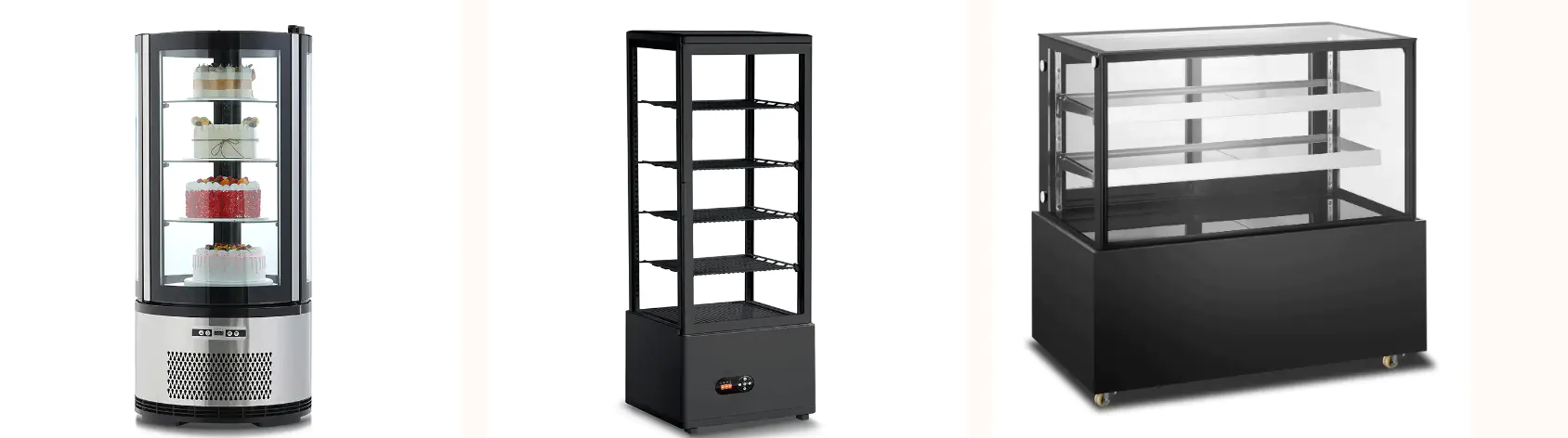
Commercial refrigeration display cabinet formats vary mainly by door style and intended product category. Below is a practical breakdown of the formats most commonly found on a supermarket or restaurant floor.
An open multi deck case has no door, allowing shoppers to reach in directly. It is common for dairy, beverages and grab and go items where speed of access matters more than minimizing cold air loss. An air curtain across the front helps hold the cold layer in place, though open fronts still lose more conditioned air than sealed formats.
A glass door reach in cooler encloses the storage space behind one or more hinged or sliding glass doors. This format is widely used for packaged beverages and dairy because it holds a steadier internal temperature and reduces the cooling load caused by open air exchange with the store.
A chest style island freezer sits low to the floor and is typically used for frozen foods and ice cream. Its low open top means cold air, which is heavier than warm air, tends to stay inside the well even without a door, though a night cover is still recommended after closing hours.
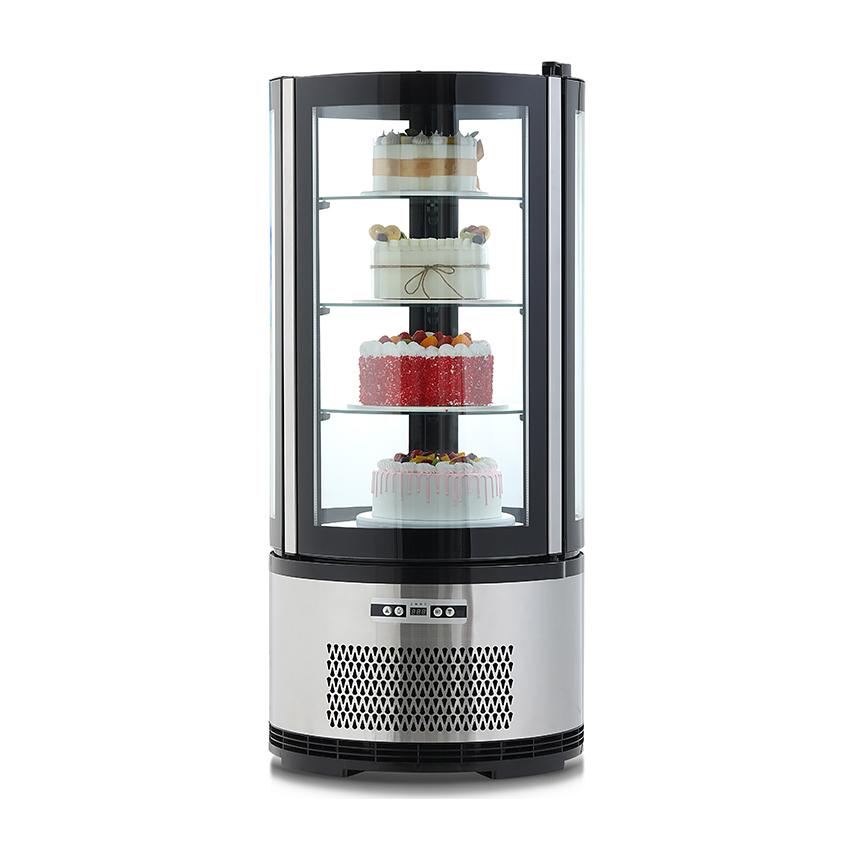
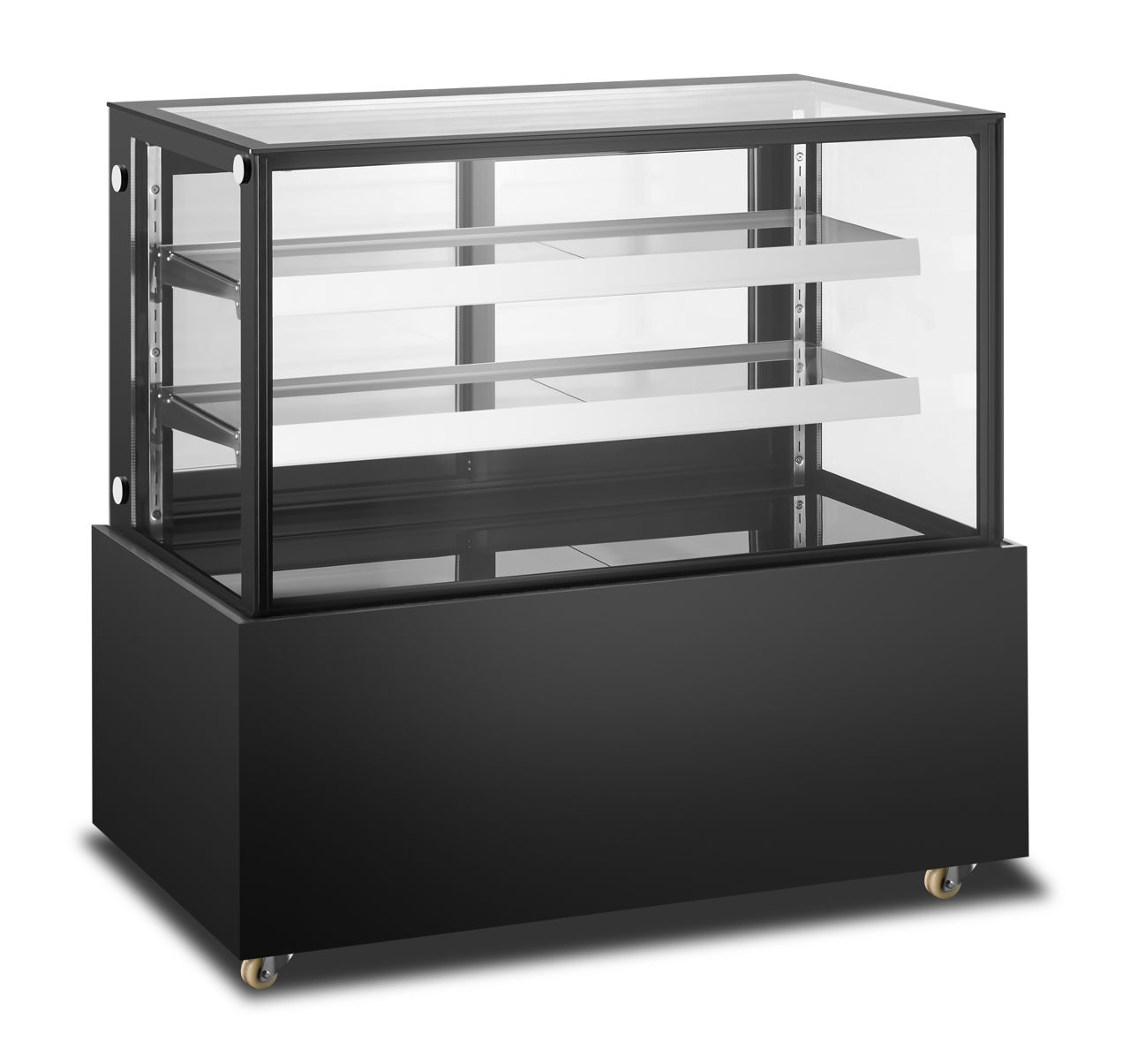
A cake showcase uses curved or flat glass panels along with dedicated interior lighting to present bakery items attractively. Because texture and appearance matter for these products, the internal temperature is usually held a little higher than for raw meat or dairy.
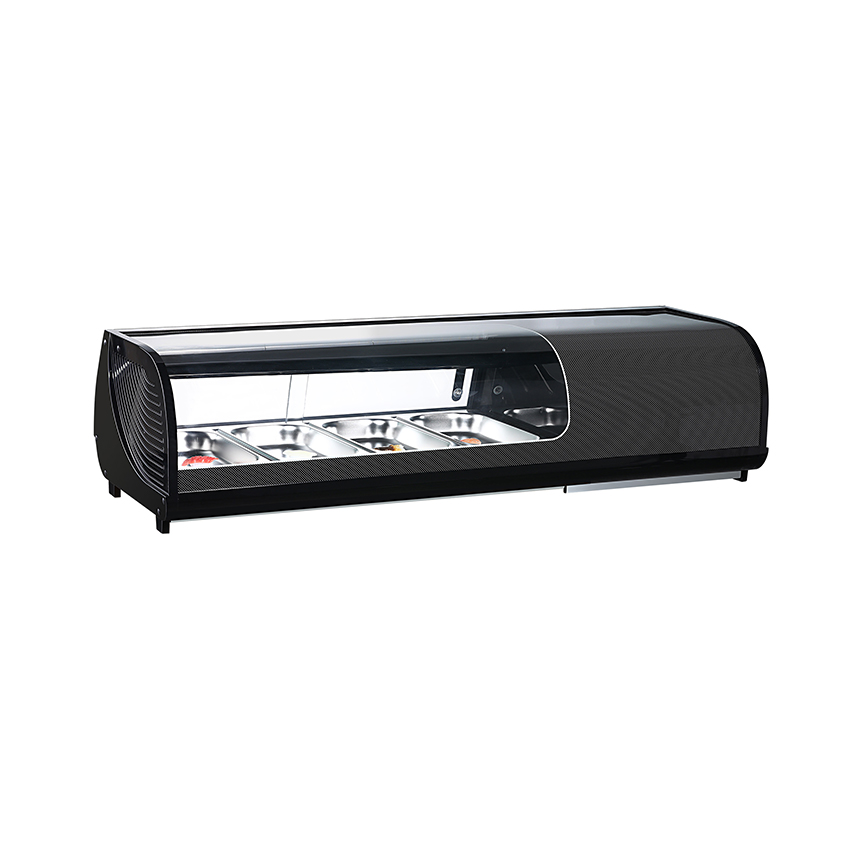
A compact countertop unit sits near the checkout counter or service point and is used for small volume, high turnover items such as drinks, snacks or desserts where floor space is limited.
| Cabinet Type | Door Style | Common Products | Best Suited For |
|---|---|---|---|
| Open Multi Deck | Open front | Dairy, beverages | High traffic aisles |
| Glass Door Reach In | Hinged or sliding glass | Beverages, packaged dairy | Stable temperature needs |
| Island Freezer | Open top well | Frozen food, ice cream | Frozen category zones |
| Cake Showcase | Curved or flat glass | Cakes, desserts | Bakery counters |
| Countertop Cooler | Small glass front | Drinks, snacks | Checkout counters |
Once the format is decided, a handful of practical features determine how well a commercial display refrigerator will perform day to day. The list below covers the points worth reviewing before placing an order.
These features interact with each other. A well insulated cabinet with a weak fan system can still struggle to hold temperature at the front edge of an open case, while a strong fan paired with poor door seals on a glass unit can waste the benefit of enclosure. Reviewing the full specification sheet rather than a single feature in isolation gives a clearer picture of expected performance.
Most commercial refrigerated display cabinets are set to hold between 2 and 4 degrees Celsius for dairy, meat and beverages, while cake and dessert showcases commonly run a little warmer, around 4 to 8 degrees Celsius, to protect texture and appearance. Holding a steady range matters more than hitting one exact number, since repeated swings above and below the target zone stress both the product and the compressor.
Illustrative pattern only, showing how frequent door openings during busy hours widen the temperature swing compared with a case that stays mostly closed. Actual figures vary by model and store conditions.
| Product Category | Typical Holding Range | Notes |
|---|---|---|
| Beverages | 2 to 4 degrees Celsius | Glass door units common |
| Dairy Products | 2 to 4 degrees Celsius | Sensitive to temperature swings |
| Meat | 0 to 4 degrees Celsius | Often the lower end of the range |
| Vegetables | 4 to 8 degrees Celsius | Some items prefer slightly higher humidity |
| Cakes | 4 to 8 degrees Celsius | Warmer range protects texture |
Open multi deck cases generally draw more electricity per day than enclosed formats because the open front continually loses conditioned air to the surrounding room. Glass door reach in coolers and island freezers tend to run more efficiently since the enclosed design limits air exchange with the store. This does not make open cases the wrong choice, since their easier access often supports faster restocking and browsing, but it is a factor worth weighing for a commercial refrigeration display cabinet operating around the clock.
Figures are general illustrative ranges for planning purposes and vary by model size, ambient temperature and how often doors are opened.
A few practical steps generally help lower running costs regardless of cabinet type. Night curtains or blinds pulled across open cases after closing hours reduce overnight heat gain. LED lighting produces less internal heat than older fluorescent tubes, which lowers the cooling load the compressor has to offset. Strip curtains fitted to the inside edge of open multi deck cases also help slow cold air loss without blocking customer access.
Capacity for a supermarket refrigerated display cabinet should be matched to expected daily footfall and product turnover rather than simply filling available floor space. A cabinet sized well above actual turnover holds partially empty shelves that waste cooling capacity, while an undersized unit forces frequent restocking during busy hours.
General planning ranges for total refrigerated display volume, meant as a starting point rather than a fixed rule for every location.
A small convenience store usually needs a compact footprint focused on beverages and grab and go items, while a mid to large supermarket typically runs several linked multi deck runs plus a dedicated cake showcase and island freezer section. Restaurants and cafes often need less total volume but still benefit from a dedicated display unit near the counter for cold drinks and desserts.
No single format wins on every measure, which is why a commercial refrigeration display cabinet decision usually comes down to trade offs. The radar comparison below places three common formats side by side across five practical criteria on a simple one to five scale.
Illustrative one to five scoring used for general comparison only, based on typical construction differences between formats.
Reading the shape of each polygon, an open multi deck case scores well on visibility since customers can see and reach products directly, but scores lower on energy efficiency because of the open front. A glass door reach in cooler trades a small amount of visibility for stronger temperature stability and lower energy draw. A cake showcase sits in between, prioritizing visibility and presentation while offering a smaller usable space than a full size multi deck run.
The diagram below sketches the main parts found inside a typical refrigerated showcase cabinet. The numbered legend beneath the illustration explains the role each part plays in keeping products cold and visible.
Where a cabinet is installed affects how hard the compressor has to work and how consistent the internal temperature stays. The points below are worth reviewing with an installer before a unit is put into permanent position.
Regular upkeep keeps a commercial refrigerated display cabinet running efficiently and helps avoid unplanned downtime. The schedule below is a general starting point that most operators can adapt to their own store routine.
| Frequency | Maintenance Task |
|---|---|
| Daily | Wipe down glass panels and shelving, remove spills promptly |
| Weekly | Check door seals and gaskets for gaps or wear |
| Monthly | Clean condenser coils to keep airflow clear of dust |
| Quarterly | Arrange a professional check of refrigerant lines and drainage |
Manufacturing scale and engineering depth affect how consistently a commercial refrigerated display cabinet performs across a large order and how well a supplier can support spare parts and technical questions after installation. Operators comparing suppliers generally look at production capacity, engineering staffing and export experience as practical indicators of manufacturing maturity.
Zhejiang Fuerj Electric Science And Technology Co., Ltd. is one example of a manufacturer built around this kind of scale. Founded in 1997, the company operates from a site covering 110,000 square meters with a construction area of 85,500 square meters, and produces both electric heating products and refrigeration equipment including freezers and cake showcases. The workforce includes 650 employees, among them 85 engineering and technical personnel, supporting an annual output of around 750,000 units across its product range. The company supplies commercial display refrigerator and cake showcase products to customers across more than 20 countries and regions spanning Europe, the Americas, Asia and Africa.
When reviewing any commercial fridge display cabinet supplier, it is reasonable to ask about production capacity, the size of the technical team, and how spare parts and after sales questions are handled once a unit is in daily use, since these details tend to matter more over the life of the equipment than the initial specification sheet alone.

It is a refrigeration unit built for retail and foodservice settings that keeps perishable products cold while remaining visible to customers through an open front or glass door, commonly used in supermarkets, convenience stores, bakeries and restaurants.
A display refrigerator is built for continuous public facing operation with glass panels or open shelving for visibility and frequent door opening, while a standard refrigerator is designed for lower frequency household use with a solid insulated door.
Most units are set between 2 and 4 degrees Celsius for dairy, meat and beverages, while cake and dessert cabinets often run a little warmer, around 4 to 8 degrees Celsius.
A compressor circulates refrigerant through an evaporator coil to absorb heat from inside the cabinet, a condenser releases that heat outside, and a fan together with a thermostat helps maintain a steady internal temperature.
Energy use varies by cabinet type and size, with enclosed glass door units generally using less electricity per day than open multi deck cases because they lose less conditioned air to the surrounding room.
Consider the product category, expected footfall, available floor space, door style and general energy performance, and match capacity to turnover rather than to the maximum available space.
Common products include beverages, dairy products, meat, vegetables and cakes, with each category generally suited to a slightly different temperature range and cabinet configuration.
With regular maintenance such as coil cleaning and seal checks, many commercial units remain in reliable daily operation for a decade or more, though actual service life depends on usage intensity and upkeep.
Glass doors help maintain a more stable internal temperature, reduce cold air loss and generally use less energy than open front designs, while still keeping products clearly visible to shoppers.
Regular maintenance includes wiping down glass and shelving, checking door seals for wear, cleaning condenser coils to keep airflow clear, and scheduling periodic professional checks of refrigerant lines and drainage.

Copyright © Zhejiang Fuerj Electric Science And Technology Co., Ltd. Rights Reserved. Food Showcase Display Manufacturer Fireplace Factory
