 English
 русский
 Español
 Français
 عربى
 italiano

Multi-product thermal display cabinet
The multi-product thermal insulation display cabinet has various sizes, elegant appearance and unique design. It ad...



Content
You can buy display cabinets from three main sources: a manufacturer that sells direct, a local restaurant equipment dealer, or an online B2B marketplace. For Food Display Cabinets that need a specific size, glass shape, shelf layout or lighting, buying from a manufacturer gives you more control, because the factory builds to your specification instead of selling whatever is already in a warehouse.
A local dealer suits a buyer who needs one standard unit soon and wants to see it in person. A marketplace helps with early comparison, but you still need to confirm the specification sheet and the service contact before you place an order.
Contact a manufacturer and send your counter dimensions and product list.
Visit a local dealer, check the unit in person and arrange delivery.
Shortlist on a B2B marketplace, then ask suppliers for full specification sheets.
The rest of this guide explains how each channel works, which cabinet types exist, how to size a unit for a bakery, cafe or shop, and what to check before the cabinet ships.
Each buying channel has a different strength. The cards below describe what you can expect from each one and where it fits.
Factories that produce refrigeration and electric heating products, such as Zhejiang Fuerj Electric Science And Technology Co., Ltd., sell cabinets to shops, bakeries, hotels and distributors. You share your space dimensions and product list, and the sales team recommends models or adjusts a design.
Good for: custom commercial food display cabinets, repeat orders and multi-location rollouts. Watch for: production time and shipping distance.
A dealer keeps a showroom, delivers to your door and often handles installation. You can open the doors, look at the glass and compare finishes side by side.
Good for: a single standard unit and a short timeline. Watch for: a range limited to the brands and sizes the dealer carries.
Bakery, hospitality and foodservice exhibitions let you see glass clarity, light color, door movement and shelf spacing on real units. You can speak with engineers and sales staff in one visit.
Good for: early research and building a supplier shortlist. Watch for: the need to follow up after the event with written specifications.
Marketplaces list many suppliers with photos and basic specifications. They work well for building a shortlist quickly. Before ordering, ask for the specification sheet, photos of the actual unit and the name of the person who handles service questions.
Good for: comparing models across suppliers. Watch for: listings that show a photo but few technical details.
Used cabinets suit short-term setups, pop-up stands or storage-style display. The refrigeration history of a used unit is often unknown, so check the compressor sound, door gaskets, glass condition and light function before you agree to take it.
The radar chart below rates two common channels on five factors that matter to most food businesses. The ratings are an editorial assessment on a 1 to 5 scale and are meant for comparison only, not as survey data.
The pattern is easy to read. Manufacturers score high on customization and product range, while local dealers score high on speed and on letting you view the unit before purchase. Many buyers combine the two: they view a similar model at a dealer or trade show, then place a specified order with a manufacturer.
| Channel | Suits | Custom sizes | Main contact |
| Manufacturer | Custom and repeat orders | Usually available | Factory sales team |
| Local dealer | Single standard units | Limited | Showroom staff |
| Trade show | Research and shortlisting | Discussed on site | Exhibitor team |
| B2B marketplace | Comparing many models | Depends on supplier | Supplier sales contact |
Buyers who have never ordered directly from a factory often expect a complicated process. In practice it follows a clear sequence, and each step produces a document you can check.
A factory with its own engineering team can answer technical questions directly instead of passing them through several people. Zhejiang Fuerj Electric Science And Technology Co., Ltd. employs 85 engineering and technical staff, which is the kind of in-house capacity worth asking about when you compare suppliers.
Before choosing where to buy, decide which type of cabinet fits your food. The type sets the temperature range, the cabinet shape and the supplier you should be talking to.
| Type | Holding target | Typical food | Common setting |
| Refrigerated display | 41 F (5 C) or below | Cream cakes, sandwiches, sushi, salads | Bakery counter, cafe, convenience store |
| Heated display | 135 F (57 C) or above | Pies, fried snacks, cooked rolls | Takeaway counter, snack bar |
| Combined cold and hot | Switchable by mode | Mixed menus that change by hour | Small cafe with limited space |
| Ambient display | Room temperature | Dry bread, biscuits, packaged goods | Bakery shelves, gift counters |
A countertop refrigerated food display case sits on an existing counter and suits cafes and small shops where floor space is limited. A floor-standing cabinet offers more shelf volume and works as a main display in a bakery or deli. Both formats come in straight-glass and curved-glass styles.
Staff-side access decides this choice. Sliding doors at the back let staff restock without walking around the counter, while a closed back works when the cabinet stands against a wall or a fixed counter front.
As a refrigerated food display cabinet supplier, Zhejiang Fuerj Electric Science And Technology Co., Ltd. lists commercial, tabletop, cake and sushi models on its product page. The four cards below show current examples with links to the full product pages.

Built for retail counters where chilled products need to be visible and kept cool at the same time.
View product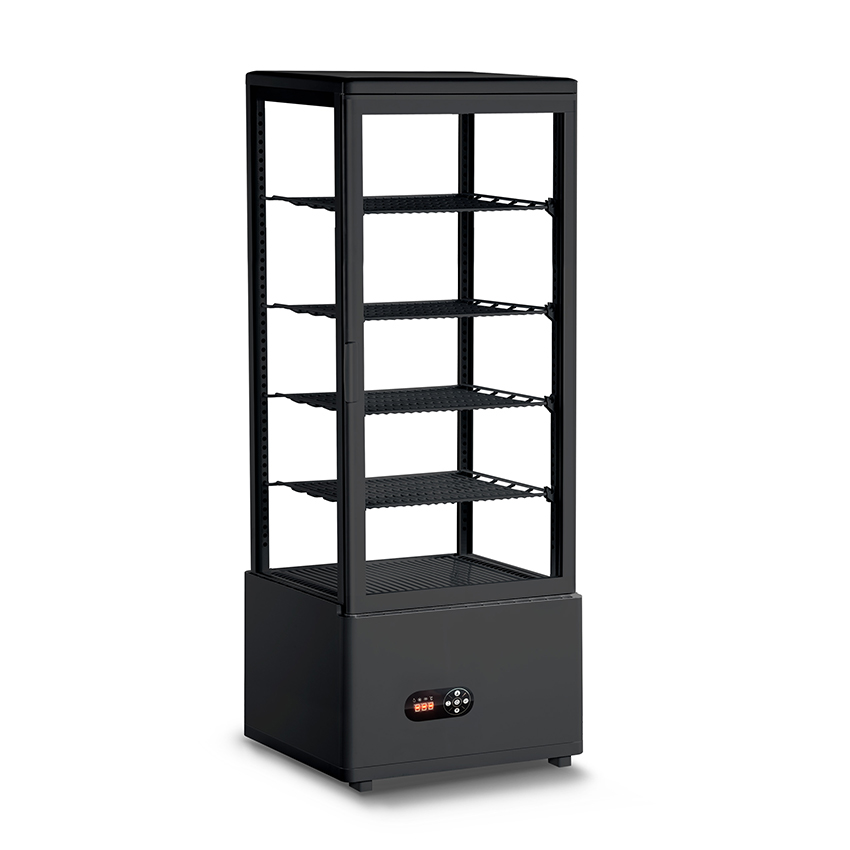
A countertop refrigerated food display case series with several models and volume options for compact spaces.
View product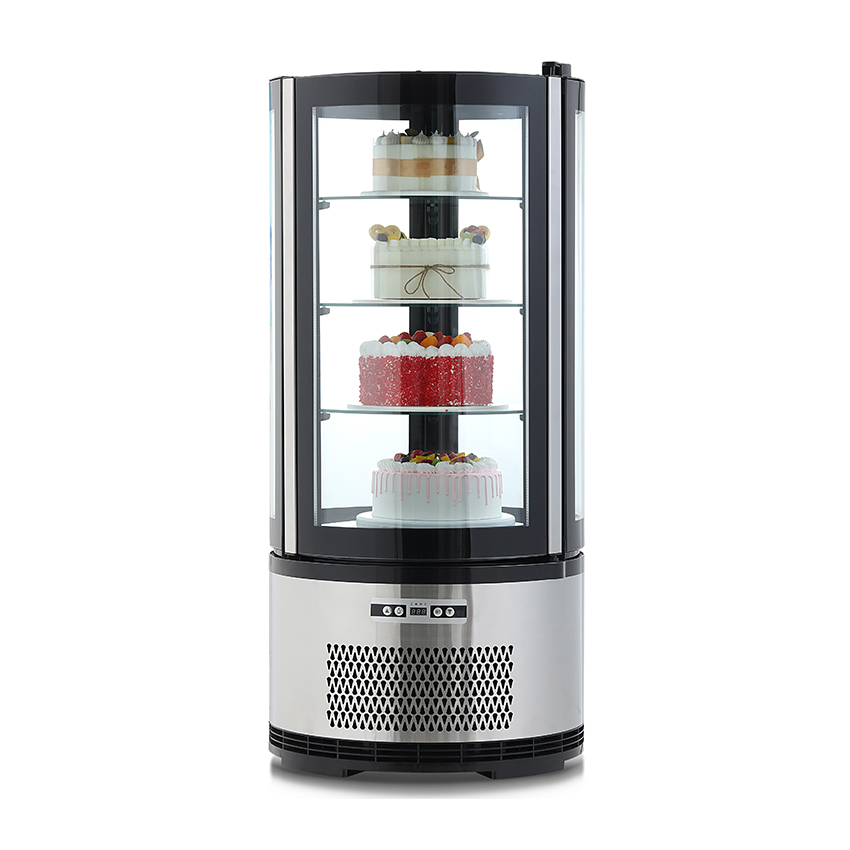
A bakery display cabinet with a rounded look and varied styles, suited to cakes and pastries at the counter.
View product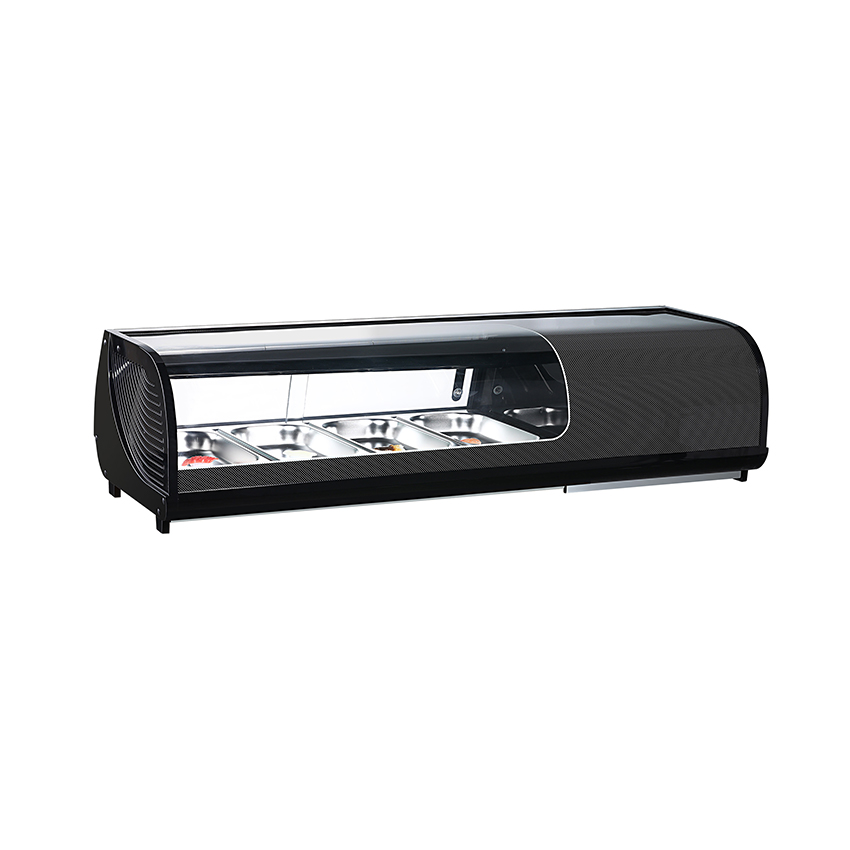
Designed around European GN pan sizes, with a side wall anti-crushing line design for pan placement.
View productIf you are searching for a commercial bakery display cabinet supplier, start with the cake display cabinet and the commercial refrigerated display cabinet, then ask the sales team which size and shelf layout fit your product range.
Cold display is only half of the picture. Shops that sell warm snacks, baked rolls or takeaway items need a cabinet that holds food above the safe hot-holding line. Fuerj lists three heated models, shown below.
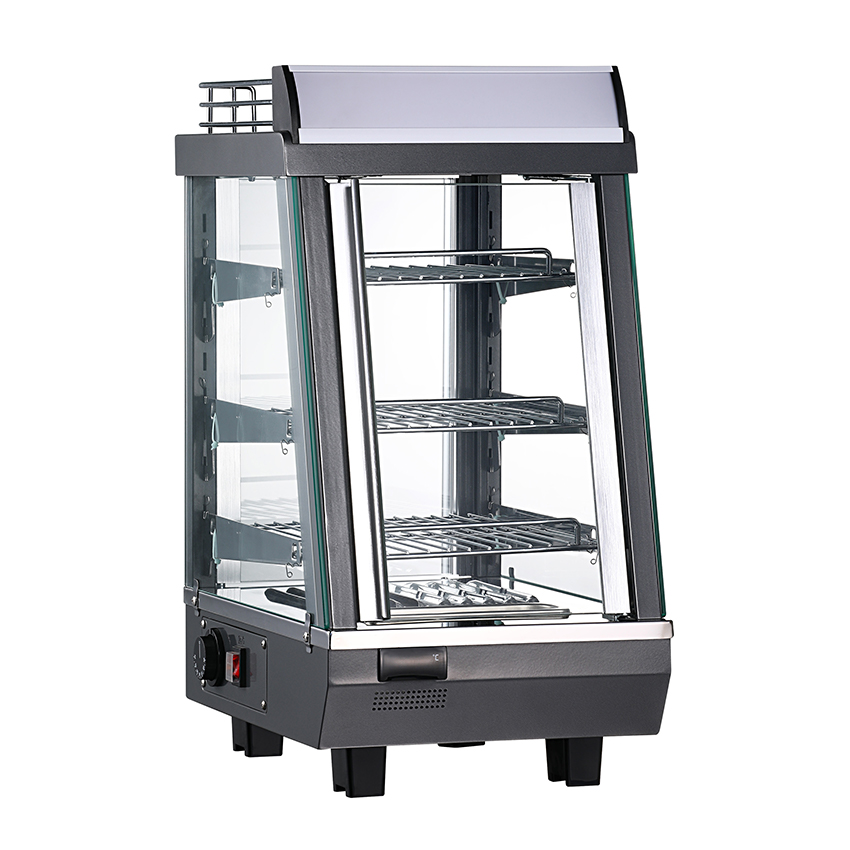
Combines refrigeration and heating, so the same cabinet can switch between the two states as the menu changes during the day.
View product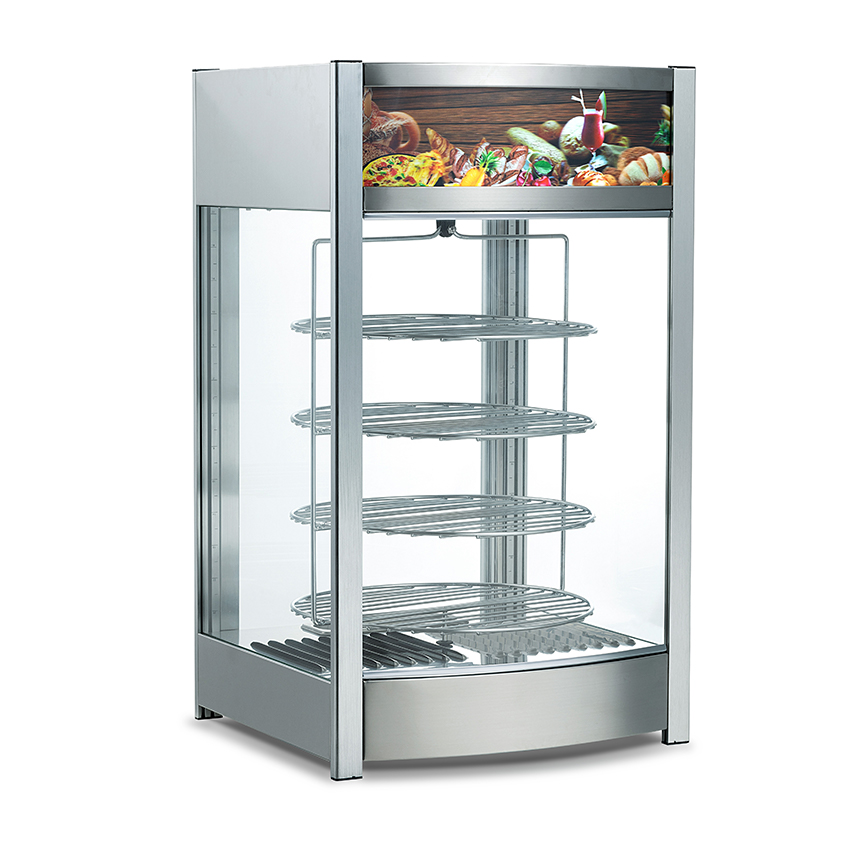
A compact insulated cabinet used in catering and retail, where small counters leave little room for equipment.
View product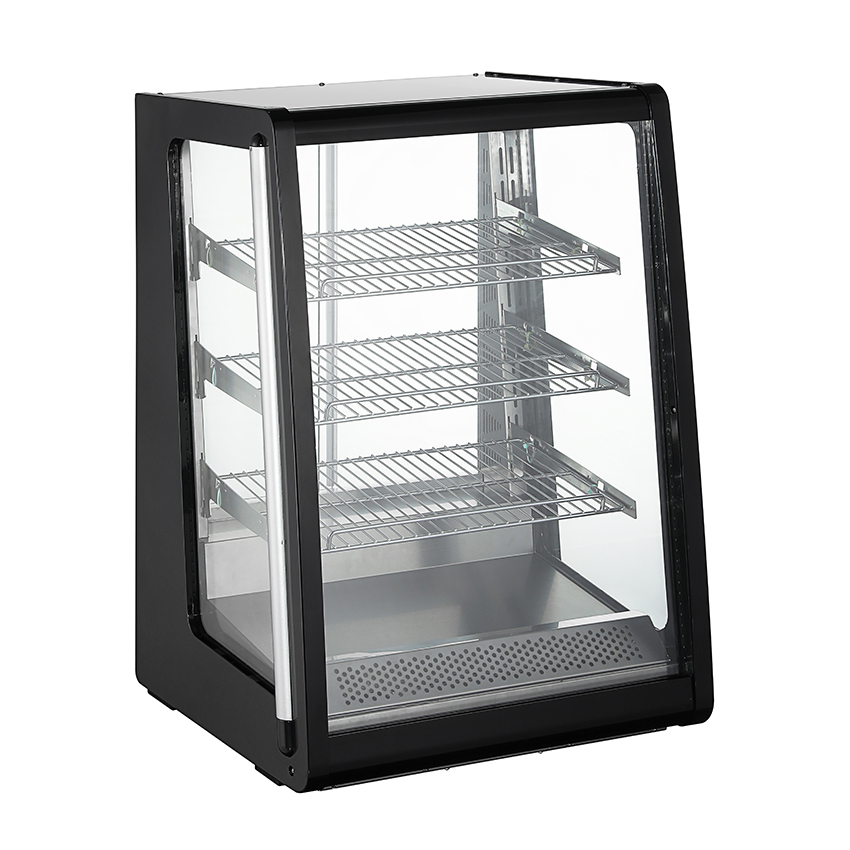
Offered in several sizes with an elegant look, intended for counters that show a range of heated products together.
View productThe cabinet you buy has to hold food in the right range. According to the FDA Food Code, cold food that needs temperature control for safety is held at 41 degrees F (5 degrees C) or below, and hot food is held at 135 degrees F (57 degrees C) or above. Food that is reheated for hot holding is brought to 165 degrees F.
The USDA Food Safety and Inspection Service describes the range between 40 and 140 degrees F as the danger zone, where bacteria can multiply quickly. It advises that perishable food should not sit out for more than 2 hours, or 1 hour when the air temperature is above 90 degrees F. A display cabinet is the tool that keeps food outside that zone while customers look at it.
A refrigerated display cabinet holds temperature. It is not built to chill warm food from scratch. Food that goes in warm raises the air temperature inside the cabinet and pushes nearby items toward the danger zone. Cook, chill and then display.
The FDA Food Code sets two stages for cooling cooked food: from 135 degrees F down to 70 degrees F within 2 hours, then down to 41 degrees F within a total of 6 hours. Kitchens that cook in batches often use a blast chiller or shallow pans in a walk-in cooler for this step, then move the food to the display cabinet once it is cold.
Practical habit: pre-cool an empty refrigerated cabinet before the first load of the day, and place a separate thermometer inside to check the actual food temperature, not only the controller reading.
Size is where many first-time buyers go wrong. A cabinet that is a few centimeters too long blocks a walkway, and one that is too shallow cannot hold standard cake boxes. Work through the checks below before you send an inquiry.
Measure the usable counter surface, not the whole counter. Leave room for the register, tongs and packaging.
Measure your largest cake box, tray or pan, then confirm the shelf depth and height can hold it with a little space around it.
Measure every doorway, elevator and corner the cabinet must pass through on delivery day.
Refrigerated units release heat. Ask the supplier how much clearance the grille needs on each side.
Check the voltage, plug type and distance to the outlet. A cabinet should have its own safe power point.
Sit or stand where a customer would and check that glass height does not hide the products behind it.
For a bakery, count how many product types you want visible at once, then multiply by the shelf area each one needs. A cake display cabinet with three shelf levels can show more variety than a single-level unit, but only if shelf spacing suits the height of your tallest cake.
Two cabinets can look alike from the front and differ inside. The diagram shows the main parts of a refrigerated glass display cabinet, followed by what to ask about each one.
Look for clear glass without distortion and check how well the door edges seal.
Light color changes how cakes and pastries look. Ask for a neutral or warm tone that shows true product color.
Check shelf material, how many levels the model has and whether the height can be adjusted.
The base holds the cooling system. Ask about airflow clearance and where condensate drains.
A clear display and simple buttons help staff set and check temperature during a busy shift.
Panels carry the finish. Ask about cleaning compatibility and whether the top surface can support signs or small items.
Many buyers search for custom commercial food display cabinets because a standard size does not fit their counter or their brand. A custom request does not mean a fully new design. Most requests change a few features on an existing platform. The table lists common options to discuss. Availability depends on the model and the supplier.
| Option | What it changes | When it matters |
| Custom size refrigerated display cabinet | Length, depth and height | Built-in counters and narrow shop layouts |
| Glass shape | Straight or curved front | Shop style and product visibility |
| Door style | Sliding, swing or open back | Staff access and customer flow |
| Shelf layout | Number of levels and spacing | Tall cakes or small portions |
| Lighting color | LED tone and placement | Product appearance under shop lighting |
| Base and panel finish | Color and surface look | Matching a brand or interior design |
When you ask for a custom change, send a sketch or a photo of the space. A drawing with measurements saves several rounds of messages and helps the supplier see whether the change needs a new mold or only a different component.
Chains, distributors and hotel groups often look for food display cabinets wholesale from one factory so every location uses the same equipment. Ordering this way brings its own checklist.
Zhejiang Fuerj Electric Science And Technology Co., Ltd. reports an annual output of 750,000 sets of various products and exports to more than 20 countries and regions across Europe, America, Asia and Africa, according to its company profile. That scale of output matters for buyers planning larger orders.
A short list of questions often reveals more about a supplier than a catalog does. Group them by topic and send them in one message.
Zhejiang Fuerj Electric Science And Technology Co., Ltd. was founded in 1997 and mainly produces electric heating products and refrigeration products such as freezers and cake showcases. The figures below come from the company profile.
For a buyer, these numbers answer practical questions: whether the supplier has engineers on staff, how large the production site is, and whether it already ships to markets outside China. You can review the full model range on the Fuerj product page.
A cabinet that arrives in good condition can still perform poorly if it is placed badly. Most early complaints about refrigerated display units trace back to installation, not to the refrigeration system. Fuerj covers this topic in its guide to commercial refrigerator installation.
Open the carton in front of the carrier if possible. Check glass, panels and the base for damage and compare the unit against the packing list.
Set the cabinet on a flat surface, leave the clearance the manual asks for around the grille and keep the unit away from direct sun and ovens.
Many refrigerated units should stand upright for a period before power-on. Follow the manual for your model, then let the cabinet reach target temperature while empty.
Load pre-chilled food, keep air gaps between items and read a separate thermometer several times in the first days.
Display cabinets work in front of customers, so fingerprints and fog show immediately. A simple routine keeps the glass clear and the refrigeration system working without strain. For more detail, see Fuerj's guide to commercial refrigerator cleaning.
| Task | How often | Reason |
| Wipe glass and shelves | Daily | Keeps products visible and surfaces clean |
| Check temperature with a separate thermometer | Each shift | Confirms food stays at or below 41 F |
| Inspect door seals | Weekly | Worn seals let warm air in |
| Clear the condenser grille of dust | Monthly or as dust builds | Lets the cooling system release heat |
| Check the drain and tray | Monthly | Prevents standing water and odor |
Use this short list when you are ready to contact a supplier. It covers the points that most often decide whether a cabinet suits a shop.
Sources: FDA Food Code (cold holding, hot holding, reheating and cooling limits); USDA Food Safety and Inspection Service (danger zone and the 2-hour guidance); Zhejiang Fuerj Electric Science And Technology Co., Ltd. company profile and product page (company figures and product descriptions).
A food display cabinet is a glass-fronted unit that shows food to customers while holding it at a suitable temperature. It can be refrigerated, heated or ambient, depending on the food on display.
Common types include refrigerated cases, heated cases, combined cold and hot cases and ambient cases. They also vary by format, such as countertop or floor-standing, and by glass shape, such as straight or curved.
Start with the food and the temperature it needs. Then match the cabinet size to your counter, check shelf spacing against your tallest product and confirm power and ventilation needs with the supplier.
A display case is built to show food through glass and holds food that is already at temperature. A refrigerator is built for storage and cooling and usually has solid doors. The two serve different jobs in a kitchen.
Not all of them. Cabinets for cream cakes, sandwiches and sushi need refrigeration. Cabinets for dry bread or packaged goods can run at room temperature, and cabinets for hot snacks use heating instead.
The FDA Food Code sets the cold holding limit at 41 degrees F (5 degrees C) or below for food that needs temperature control. Check food temperature with a separate thermometer, since the controller shows air temperature.
A refrigerated cake display cabinet with adjustable shelves and clear glass suits cream and fresh-fruit cakes. Dry pastries and cookies can sit in an ambient case. Ask the supplier about shelf height for tall cakes.
Count the products you want visible at once and the shelf area each needs, then check the usable counter length. Leave room for a register and a staff path. A custom size is an option when standard models do not fit.
A local restaurant equipment dealer is convenient for a single standard unit. A manufacturer is a good option when the cafe counter has an unusual size or needs a matching look.
Many manufacturers accept custom size requests on an existing platform. Send counter measurements, product details and a sketch, then ask for a dimension drawing to review before production.
Some models combine refrigeration and heating and switch between the two, such as the table hot cabinet on the Fuerj product page. Cold and hot food should not share the same compartment at the same time.
Wipe glass and shelves daily, check door seals weekly and clear the condenser grille of dust monthly or as dust builds up. A regular routine helps the cabinet hold temperature steadily.







Copyright © Zhejiang Fuerj Electric Science And Technology Co., Ltd. Rights Reserved. Food Showcase Display Manufacturer Fireplace Factory
